The First Places Cars Rust: Where to Look and What to Watch For
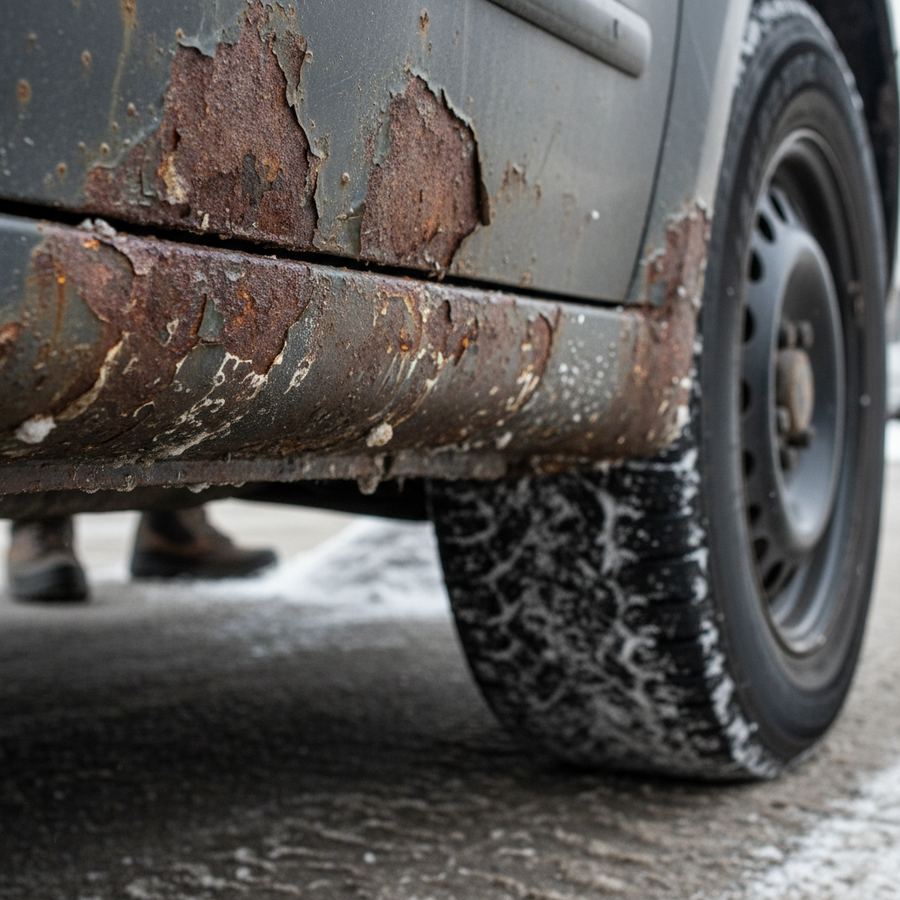
Rust does not start where you expect it to. Most people picture rust on fenders and quarter panels because that is what they see from the outside. But the corrosion that actually kills vehicles starts in places you never look at unless you crawl underneath or pull back a plastic liner. By the time rust is visible on the exterior, the damage underneath is usually years ahead of what you see.
Knowing where to look and what early corrosion looks like is the difference between catching a $200 problem and discovering a $2,000 one. Here is where cars rust first and how to inspect for it.
Wheel Wells
The wheel wells take more abuse than any other body panel. Road spray from the tires hits them directly, carrying salt, sand, gravel, and water at high velocity. Stone chips are constant. The plastic inner fender liners protect the metal fender somewhat, but debris packs between the liner and the metal, holding moisture against the surface.
To inspect, pull back the fender liner clips and look at the metal behind it. On vehicles over 5 years old in salt-belt climates, it is common to find surface rust starting here even on well-maintained vehicles. The fender lip where the inner and outer panels are spot-welded together is particularly vulnerable. That seam traps moisture and corrodes from within.
What to look for: bubbling paint along the fender lip, orange staining on the liner from rust behind it, and soft spots when you press on the metal. If the paint is still smooth but you see orange dust collecting on the liner, corrosion is happening behind the paint where you cannot see it yet.
Rocker Panels
Rocker panels are the enclosed box sections that run along the bottom of the vehicle between the front and rear wheels, below the doors. They are structural. They are also one of the most common rust-through points on any vehicle driven in a salt-belt climate.
The problem with rocker panels is that they corrode from the inside out. Salt water enters through seams and drain holes at the bottom. If those drain holes get clogged with road debris, water pools inside the panel and sits there. The outer skin might look fine while the inner structure is deteriorating. You find out when paint starts bubbling on the outside, and by then the inside is perforated.
Inspection tips: look along the bottom edge of the rocker panel for bubbling, flaking, or discoloured paint. Press along the bottom with your thumb. Solid metal will not flex. Thinned or perforated metal will feel soft or crunchy. Check the drain holes to make sure they are clear. If you can see daylight through the rocker panel where there should be solid metal, the damage is advanced.
Door Bottoms
Doors are built with an outer skin and an inner structural panel. The bottom of the door has drain holes to let moisture escape. When those holes clog with dirt and debris, water collects inside the door and rusts the lowest section of both panels from within.
The first visible sign is usually paint bubbling along the very bottom edge of the door. On some vehicles, the bottom of the door develops a rough, pebbled texture before it bubbles. That texture is rust forming under the paint. Once it breaks through the outer skin, the structural inner panel is already well past surface rust.
Check every door, including the rear ones. Rear doors often get less attention but face the same exposure. On trucks and SUVs, the rear door bottoms are especially prone because they are longer and catch more spray from the front tires.
Tailgate Seams
Pickup truck tailgates and SUV/hatchback liftgates have seams along the bottom and sides where panels are folded and welded together. These seams trap moisture in exactly the same way that door bottoms do. The added problem on tailgates is that they get slammed constantly, which flexes the seams and cracks any paint or sealer bridging the joint.
On pickup trucks specifically, the area where the tailgate meets the bed sides is a rust hotspot. Debris collects in the crevice, holds moisture, and corrodes the edges of both the tailgate and the bed. The hinge pockets on the bed sides are also vulnerable since water sits in them every time it rains or the truck gets washed.
Inspect the bottom edge of the tailgate and the hinge mounting areas. On trucks over 5 years old, surface rust here is almost universal. The question is whether it has progressed beyond the surface.
Brake Lines and Fuel Lines
Brake lines and fuel lines run along the underside of the vehicle, clipped to the frame or body with metal brackets. They are directly exposed to road spray. Factory brake lines are coated steel, but that coating deteriorates over time. Once the coating fails, the line corrodes from the outside in.
Brake line corrosion is particularly dangerous because the failure mode is sudden. The line looks intact until it is not. A corroded line will develop pitting that is hard to see without close inspection. The pits deepen until the wall is thin enough for hydraulic pressure to push through. That moment usually comes during hard braking, which is exactly when you need the brakes most.
To inspect brake lines, get under the vehicle with a flashlight and look at the lines from end to end. Healthy lines are smooth with intact coating. Corroded lines will show rough, pitted surfaces and orange or brown discolouration. If you can scrape coating off with a fingernail and find pitted metal underneath, the line needs replacement. Do not wait for it to fail. A brake line failure while driving is one of the most dangerous situations a corroded vehicle can put you in.
Fuel lines face similar exposure but are increasingly made from corrosion-resistant materials on newer vehicles. On older vehicles with steel fuel lines, inspect them the same way you inspect brake lines.
Subframe and Crossmembers
The subframe bolts to the unibody and carries the engine, transmission, and front suspension. Rear crossmembers and subframes carry the rear suspension. These components are heavy gauge steel, which means they take longer to corrode through than thin body panels. But when they do fail, the vehicle is structurally unsafe.
Road salt collects on the flat top surfaces of the subframe where spray splashes up from the road. Water pools in low spots and crevices. Crossmembers develop corrosion along their upper flanges and at the mounting points where they bolt to the body.
Inspection requires getting under the vehicle, ideally on a hoist. Look at the subframe for scaling rust where the surface is flaking and layers are peeling off. Tap questionable areas with a screwdriver handle. Solid metal rings. Corroded metal sounds dull or thunks. If you can push a screwdriver through the metal, the component is failed. Several manufacturers have issued recalls for subframe corrosion, which gives you a sense of how widespread and serious this issue is.
Exhaust Heat Shields and Brackets
Heat shields are thin metal panels that protect the body from exhaust heat. Because they are thin, they rust quickly. A rusted heat shield is not a structural concern, but it is a nuisance. Loose heat shields rattle and vibrate, and they sometimes fall off entirely. The brackets that hold them corrode too, and replacement brackets on a rusted vehicle can turn a 15-minute job into a 2-hour fight with seized fasteners.
Heat shield rust is also an early indicator. If the heat shields on a vehicle are badly corroded, the brake lines, fuel lines, and structural components that have been exposed to the same salt are in similar or worse condition. A rusted heat shield is a warning to look deeper.
How to Catch Rust Early
The key is making inspection a habit rather than a reaction. Here is a practical approach:
- Once a year in spring, get under the vehicle after the last salt event and look at the areas listed above. Spring inspection catches winter damage before warm weather accelerates it.
- At every tire swap or brake inspection, look at the wheel wells, rocker panels, and visible brake lines. You are already under or near the vehicle.
- Check door bottoms and tailgate edges when you wash the car. Run a finger along the bottom edge. Paint bubbles or roughness mean corrosion is starting underneath.
- Clear drain holes in doors and rocker panels at least once a year. A piece of wire or a compressed air nozzle will open clogged holes and let trapped water escape.
Early rust is cheap to address. A touch-up pen on a stone chip costs $10. Clearing a clogged drain hole takes 2 minutes. Having a shop treat a specific problem area with cavity wax or rust proofing costs $50 to $100. The same problem discovered 3 years later can mean panel replacement, structural welding, or a vehicle that is no longer worth repairing. For vehicles with known corrosion-related recalls, NHTSA's recall database is worth checking by VIN.
If your vehicle is past the 5-year mark in a salt-belt climate, an annual underbody inspection is as important as any seasonal maintenance you do. The vehicles that survive to 15 or 20 years in Ontario are not the ones that never rusted. They are the ones whose owners found the rust early and dealt with it before it spread. The same attention to detail that keeps an older car reliable mechanically is what keeps it structurally sound underneath.