Rust Proofing vs Undercoating: What Is the Difference?
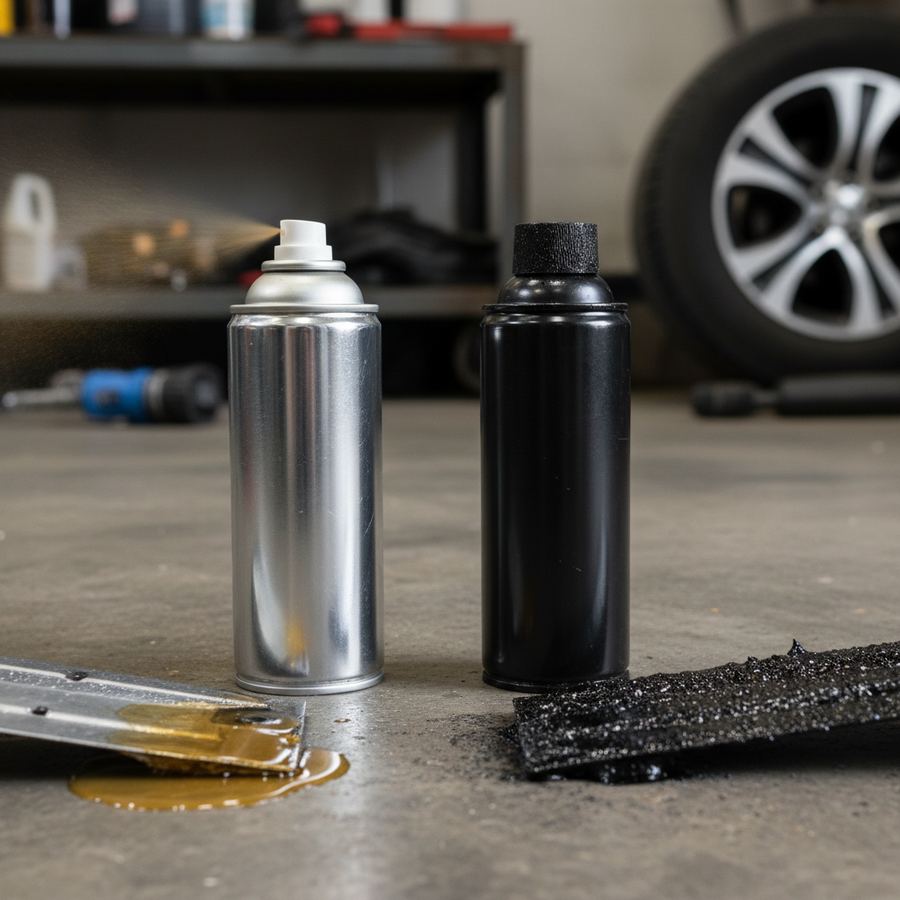
Rust proofing and undercoating get used interchangeably by most people, but they are different products with different purposes. Choosing the wrong one for your situation can waste money or, worse, accelerate the problem you are trying to prevent. Understanding what each one actually does will help you make a decision that fits your vehicle.
Oil-Based Rust Proofing
Oil-based rust proofing is a thin, penetrating product that creeps into seams, joints, enclosed cavities, and crevices. It displaces moisture, coats bare metal with a light oil film, and reaches areas that are impossible to access with thicker products. Popular brands in Canada include Krown, Rust Check, and Fluid Film.
The product is sprayed through access holes in doors, rocker panels, quarter panels, and pillars. It is also applied to the underbody, brake and fuel lines, and wheel wells. Because it is thin, it wicks into spot-welded seams and tight spaces by capillary action. This is its main advantage. Corrosion typically starts in exactly these hidden areas, and oil-based products are the only type that can reach them after the vehicle is assembled.
The downsides are real. Oil-based rust proofing needs to be reapplied annually. It drips for a few days after application, which means spots on your driveway. It does not provide a thick physical barrier on exposed surfaces, so it wears off faster in areas that take direct road spray. And it has a distinct smell that lingers for a week or so in the cabin because the product is sprayed into door cavities and pillar interiors.
Despite those drawbacks, oil-based rust proofing is the standard recommendation for vehicles in salt-belt climates. The ability to reach enclosed spaces where corrosion actually starts outweighs the inconvenience of annual application and temporary dripping.
Rubberized Undercoating
Rubberized undercoating is a thick, tar-like or rubber-based product applied to the exposed underside of the vehicle. It dries to a semi-rigid coating that provides a physical barrier between the metal and the road environment. Some formulations also include sound-deadening properties, which is why some people apply them purely for noise reduction.
The product is sprayed or brushed onto the underbody panels, frame rails, wheel wells, and other exposed surfaces. It builds up a visible layer that you can see and touch. When applied to clean, dry, rust-free metal, it does a good job of preventing initial corrosion. Factory undercoating on new vehicles works on this same principle.
The problem comes with age and damage. Rubberized coatings are rigid or semi-rigid. They crack over time from vibration, temperature cycling, and stone impacts. When they crack, moisture gets underneath the coating and sits against the metal with no way to evaporate. The coating that was supposed to protect the metal now traps moisture against it, accelerating corrosion in a way that is invisible until the coating falls off or the metal perforates underneath.
This is the main risk with rubberized undercoating on older vehicles. If you apply it over existing surface rust or over metal that is not perfectly clean and dry, you are sealing moisture in. The rust continues underneath the coating, and you cannot see it happening. When it finally breaks through, the damage is often worse than it would have been with no coating at all.
When Oil-Based Is the Right Choice
Oil-based rust proofing is the better option in most situations for vehicles driven in Ontario and other salt-belt regions. Specifically:
- Vehicles of any age that still have solid metal underneath. The penetrating nature of the product reaches areas that no other treatment can access on an assembled vehicle.
- Older vehicles with some surface rust. Oil-based products can be applied over light surface corrosion because they displace moisture rather than trapping it. They will not reverse the rust, but they slow progression without making things worse.
- Vehicles with existing rubberized coatings that have cracked. Oil-based product can creep into the cracks and provide some protection to the metal underneath without requiring removal of the old coating.
- Anyone willing to commit to annual application. The product works, but it needs to be refreshed every year before winter.
When Rubberized Undercoating Makes Sense
Rubberized undercoating is appropriate in narrower circumstances:
- New or nearly new vehicles with clean, rust-free underbodies. Applied to bare or factory-coated metal in good condition, it provides a durable barrier that lasts multiple years.
- Vehicles used in gravel or off-road conditions where stone impact is a primary concern. The thick coating absorbs impacts better than a thin oil film.
- Sound deadening on the floor and wheel wells. This is a secondary benefit, but for some owners it is the primary motivation.
- Fleet vehicles or work trucks where the owner plans for a defined service life and wants maximum protection during that period without annual reapplication.
On a new vehicle, some owners apply rubberized undercoating to the exposed underbody for long-term barrier protection and then use oil-based rust proofing annually for the enclosed cavities and seams. That combination addresses both the external surfaces and the hidden areas. It costs more, but for a vehicle you plan to keep for 15 years, the combined approach covers all the bases.
What Shops Prefer and Why
Most independent shops in Ontario that specialize in corrosion protection lean toward oil-based products. The reasoning is practical. Most of their customers come in with vehicles that are already a few years old. Those vehicles may already have surface rust in enclosed areas. Applying rubberized coating at that point risks trapping moisture, while oil-based products work safely on those surfaces.
Dealers often push rubberized undercoating as an add-on at the time of purchase. The margins are good and the product looks impressive. A thick, visible coating on the underbody of a brand new vehicle gives the customer something tangible to see. Whether it was applied properly, whether the surfaces were adequately prepared, and whether the application was thorough enough to actually protect long-term are harder for the customer to evaluate.
Some shops avoid rubberized undercoating entirely on used vehicles because of the moisture-trapping risk. They have seen too many cases where a thick undercoating was hiding advanced corrosion underneath. When the coating eventually fails or gets peeled back during a repair, the metal behind it is worse than uncoated metal of the same age. That experience makes them cautious, and reasonably so.
Choosing the Right Approach
Ask your shop about which approach fits your vehicle. A rust proofing application from a shop that inspects first and treats problem areas is worth more than a generic spray. A good shop will look at the current condition of the underbody, assess what type of protection makes sense, and apply the product to the areas that need it most rather than just coating everything uniformly. If they recommend against undercoating on an older vehicle, that is honest advice, not a missed upsell.
The Products Between
There are also wax-based and lanolin-based products that fall between oil-based and rubberized in terms of film thickness and longevity. Wax-based cavity protectants like Fluid Film Liquid A or 3M cavity wax build a thicker film than straight oil but remain soft enough to not crack. Lanolin-based products self-heal to some degree, which means minor cracks in the film close up rather than letting moisture in.
These products are often used for targeted treatment of specific cavities or problem areas rather than whole-vehicle application. A shop might use oil-based product for the general application and then apply a heavier cavity wax in areas prone to pooling water or heavy corrosion. It is a layered approach that gets more protection where it matters most.
What Matters More Than the Product
The application quality matters more than the product choice. A thorough application of an average product outperforms a careless application of a premium one. Key indicators of a good application include:
- Product sprayed into every enclosed cavity through access holes, not just the underbody
- Door interiors, rocker panels, quarter panels, and pillars all treated
- Wheel wells coated thoroughly, including behind the fender liners
- Brake and fuel lines coated along their full length
- Application time of 30 to 45 minutes minimum, not 10 minutes
- Pre-application inspection to identify existing problems and areas needing extra attention
Whether you choose oil-based rust proofing, rubberized undercoating, or a combination, the person applying it determines the outcome more than the product itself. A technician who takes the time to access every cavity and coat every vulnerable surface is giving your vehicle real protection. A technician who sprays the underbody for 10 minutes and sends you on your way is giving you peace of mind without the substance to back it up.
If you are unsure which approach is right for your situation, start with an underbody inspection to see what condition the metal is in. That information drives the decision. And if you are combining rust proofing with your annual seasonal prep, fall is the right time. Get the protection on before the salt trucks start rolling, and give yourself the best chance of keeping the vehicle reliable for the long haul.