Budget Tire Buying Mistakes That Cost You More in the Long Run
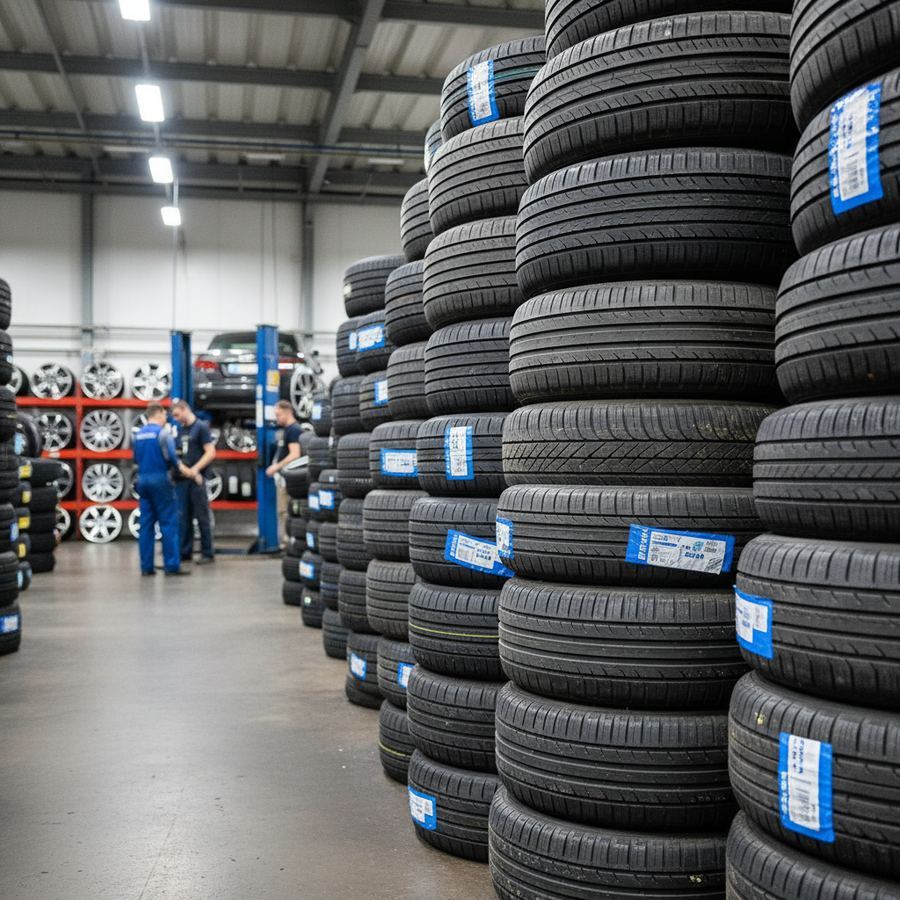
Buying budget tires is a perfectly reasonable thing to do. Not everyone needs high-performance rubber, and plenty of affordable tires do their job just fine. But there's a difference between being smart about tire spending and just clicking "sort by price: low to high" and buying whatever comes up first. That second approach creates problems that end up costing more than the tires you were trying to save money on.
Here are the mistakes I see people make over and over, and what to do instead.
Buying the Wrong Size
This one sounds too obvious to be common, but it happens constantly. People look at a tire listing that's close to their size, see the price is $30 cheaper, and convince themselves it will work. It won't. Tire sizes exist for a reason. The numbers on the sidewall tell you the width, aspect ratio, and wheel diameter. All three need to match what your vehicle requires.
Your correct tire size is printed on a sticker inside the driver's door jamb. It's also in your owner's manual. That's the size you need. Not "close to" that size. Not "one number off." The exact size. A tire that's the wrong width changes your speedometer accuracy, affects your ABS and traction control systems, and can rub against suspension components. A tire with the wrong wheel diameter simply won't mount on your rim.
If you're unsure, write down the full size code from your door sticker before you start shopping. It looks something like 205/55R16. Every number matters.
Ignoring the Load Rating
Every tire has a load index, which is a number that tells you the maximum weight that tire can safely support. On a passenger car, you might not think much about this. But if you drive an SUV, a crossover, or any vehicle that regularly carries heavy loads or tows, the load rating is critical.
Budget tires sometimes come in the right physical size but with a lower load index than what your vehicle requires. This is especially common when shopping for light truck sizes. A tire rated for 1,200 pounds per corner isn't interchangeable with one rated for 1,500 pounds, even if the dimensions are identical. Running underrated tires leads to excessive heat buildup, accelerated wear, and in serious cases, blowouts.
The minimum load index for your vehicle is on that same door jamb sticker. Match it or go higher. Never go lower.
Buying on Price Alone
This is the big one. The cheapest tire in your size is not automatically the best value. Value means cost divided by useful life, multiplied by how well the tire actually performs during that life. A $60 tire that lasts 25,000 km and feels squirrely in rain is not a better deal than an $85 tire that lasts 50,000 km and stops safely on wet pavement.
Budget tires from reputable manufacturers are real. Companies like General, Hankook, Falken, and Kumho make affordable tires that perform well in independent testing. The truly bottom-barrel brands with no reputation, no warranty, and no test data are where the risk lives. You don't need to spend $200 per tire, but you should be able to find real reviews and a treadwear warranty for whatever you buy.
Compare options and check inventory at Tires.org before settling on the cheapest option. Having actual pricing from multiple brands in front of you makes it much easier to see where the value sits.
Not Checking the Manufacture Date
Every tire has a DOT code stamped on the sidewall. The last four digits tell you when that tire was made. The first two are the week, the last two are the year. A code ending in 2223 means the tire was manufactured in the 22nd week of 2023.
This matters because rubber degrades over time whether the tire has been driven on or not. A "new" tire that's been sitting in a warehouse for four years has already lost some of its grip and flexibility. Most tire safety organizations recommend replacing tires after six years from manufacture, regardless of tread depth. If you're buying budget tires and the manufacture date is already three years old, you're starting with half the usable lifespan.
This is more common than you'd expect, especially with deeply discounted inventory, closeout sales, and lesser-known online retailers. Always check the DOT code. If the seller won't tell you the manufacture date before purchase, that's a sign to shop elsewhere. For more detail on what those codes mean and when age becomes a safety issue, read our full guide to tire age and condition.
Buying Singles Instead of Pairs
When one tire fails or wears out, the temptation is to replace just that one tire. It's half the cost. The problem is that mismatched tires on the same axle create handling imbalances. One tire with 8mm of tread and one with 3mm will grip differently in every situation: braking, cornering, wet roads, snow.
At minimum, tires should be replaced in pairs on the same axle. The two tires on your front axle should match, and the two on the rear should match. Ideally, all four match, but pairs are the floor. Running a single new tire next to a worn tire is asking for unpredictable handling, and that's the last thing you want when you need to make an emergency stop or swerve.
If you're on a tight budget and only one tire is damaged, check the remaining tread on its partner. If that tire still has more than half its tread, you can sometimes find a matching tire from the same brand and model. If the partner tire is also worn, just replace both. The math on matching tires always works out cheaper than dealing with the consequences of not matching.
Skipping the Speed Rating Check
Speed ratings indicate the maximum sustained speed a tire is engineered to handle safely. For most daily drivers, this isn't about going 200 km/h on the highway. It's about the tire's construction, heat management, and handling characteristics at normal driving speeds. A tire with a lower speed rating than your vehicle requires may have a softer sidewall or different internal construction that changes how the car responds.
Your vehicle was designed with a specific speed rating in mind. Dropping below it might save you $10 per tire, but it changes the ride and handling in ways you might not notice until you need to make a quick lane change and the car doesn't respond the way it should.
Forgetting About Installation Costs
A tire that costs $55 online plus $25 shipping plus $20 per tire for mount and balance plus $4 per tire for valve stems plus $3 per tire for disposal isn't really a $55 tire. It's a $107 tire. Meanwhile, the local shop selling a better tire for $95 installed might include all of that in the price.
When comparing budget tire options, always compare the total out-the-door cost. Some shops offer package deals on installation when you buy four tires. Some online retailers ship free to a local installer who charges less for mount and balance. The sticker price is just the starting point. Factor in the complete cost before deciding where the real savings are.
The Bottom Line on Budget Tires
Saving money on tires is fine. There's no rule that says you need to buy premium rubber for a 12-year-old commuter car. But the savings need to be real savings, not false economy that leads to premature replacement, unsafe handling, or a roadside blowout. Get the right size, verify the load and speed ratings, check the manufacture date, buy in pairs at minimum, and compare the full installed cost.
That's not complicated. It just requires about 15 minutes of homework before you hand over your credit card. And those 15 minutes can easily save you from spending the same money twice, or worse, dealing with a tire failure that could have been avoided.
For broader context on keeping your vehicle expenses manageable, the Consumer Reports tire section publishes independent test results that include budget-friendly options.