Digital Vehicle Inspections Explained
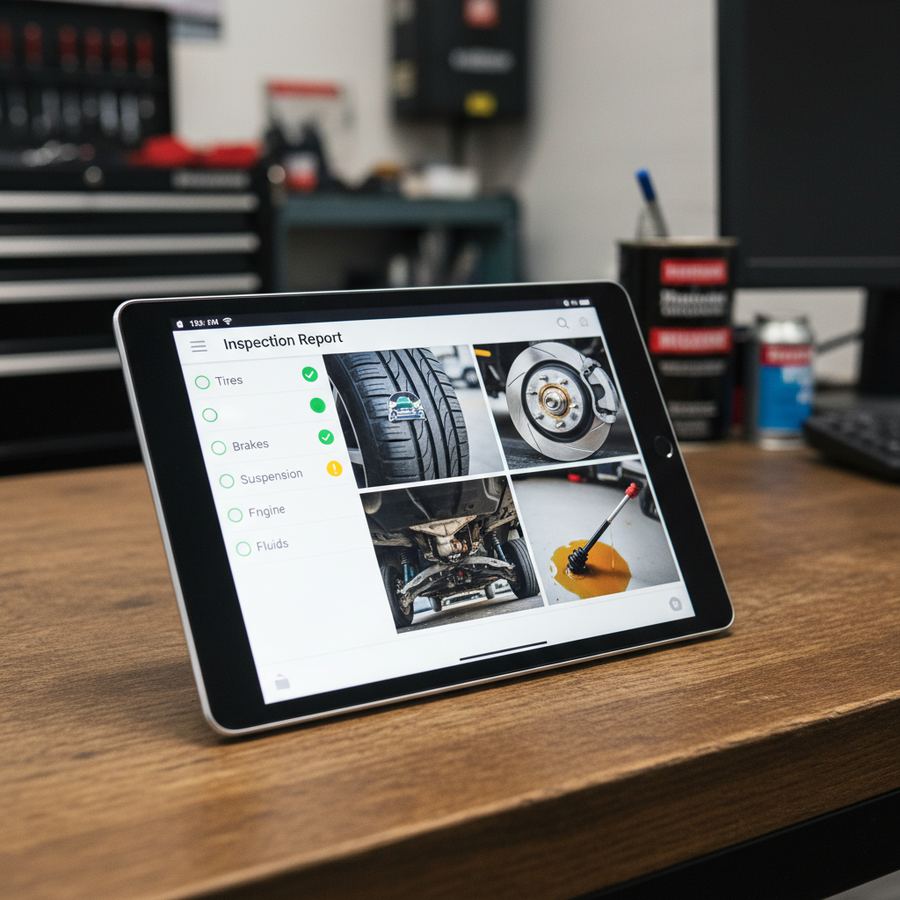
You bring your car in for an oil change. An hour later, you get a text with a link. You open it and see photos of your actual brake pads, your tires with tread measurements, a shot of a leaking valve cover gasket, and a cabin air filter that looks like it's been filtering campfire smoke. Each item is marked green, yellow, or red depending on urgency.
That's a digital vehicle inspection. If you haven't experienced one yet, it changes how you think about shop visits.
How They Work
The process starts the same way any inspection does. A technician goes through your vehicle systematically, checking brakes, tires, suspension, fluids, belts, hoses, lights, and everything else on the list. The difference is documentation.
Instead of writing notes on a paper form, the tech uses a tablet or phone. They photograph anything that needs attention. Worn brake pads get shot next to a measurement gauge. A cracked belt gets a close-up. A tire with uneven wear gets photographed from the angle that shows the problem. Each finding gets categorized: good, needs monitoring, or needs attention now.
The completed inspection gets sent to you electronically. You can review it on your phone at work, show it to someone who knows cars, or just take your time without anyone waiting on the phone for an answer.
Why Photos Change Everything
The fundamental problem with traditional inspections is trust. A shop says you need brakes. You can't verify that without crawling under the car yourself. Are the pads really worn? How worn? Could they last another few months?
Photos eliminate that problem. When you can see your brake pad next to a ruler showing 2mm of material left, the recommendation makes sense on its own. You're looking at evidence, not taking someone's word for it.
This works both ways. Good digital inspections include the green items too. Your tires at 7mm of tread. Your brakes at 60%. Your fluids at the right level. That builds confidence that the shop isn't inventing problems. When they do find something, you're more inclined to believe them because they showed you everything that passed.
Multiple Options Instead of One Big Number
Rather than calling you with a single total and asking yes or no, a good digital inspection lets you see each item independently. You can approve the brake job but hold off on the cabin filter. You can say yes to the oil leak repair but push the tire replacement to next month.
A $2,500 phone call is overwhelming. But when you can see that it's $800 for brakes, $600 for a gasket, $400 for tires, and $700 for suspension work, you can prioritize. Do the brakes and gasket now, plan for tires next month, monitor the suspension. That informed decision-making is impossible with a single lump number and is exactly what clear estimates should provide.
What a Good Inspection Covers
Brakes. Pad and rotor measurements, photos of the friction material, notes on noise or pulsation. Both axles, not just the one they want to sell you.
Tires. Tread depth at multiple points, photos of irregular wear, tire age if the date codes show they're getting old. Tire condition and age are separate safety concerns that both matter.
Under the hood. Fluid levels and condition, belt condition, hose condition, battery test results, air filter condition.
Under the car. Suspension components, exhaust, leaks, CV boots, bushings. The stuff you never see but matters for older vehicles you're trying to keep on the road.
Lights and wipers. Basic but important. A burned-out brake light is a safety issue and a ticket waiting to happen.
How Shops Benefit Too
Technicians document findings faster by snapping photos than by writing descriptions. The service advisor doesn't have to interpret a tech's handwriting or remember verbal notes from hours ago. The team is looking at the same information, which means fewer miscommunications.
Inspection workflow tools like ShopCommander let shops document and share findings with photos. When the tech finishes, the inspection goes to the advisor who reviews it and sends it to you. No paper shuffling, no lost notes, no phone tag trying to describe something that's easier to show.
What to Do With the Results
Take ten minutes to actually look through a digital inspection when you get one. Don't just scroll to the total. Look at the photos. Pay attention to the yellow items because those become red items in six months. Planning for them now means fewer emergency repairs later.
Save the link or take screenshots. This gives you a baseline. When you go back in six months, you can compare. If your brake pads went from 5mm to 2mm, that tracks. If they went from 5mm to 1mm in 5,000 km, something else might be going on.
If your current shop doesn't offer digital inspections, it doesn't mean they're bad. Plenty of excellent mechanics still use paper and phone calls. But the trend is moving in one direction for good reason. Transparency builds trust, and photos are the most transparent way to communicate car problems to someone who isn't a mechanic. If you're choosing between shops, the one sending you evidence of your car's condition has earned a closer look.