Why Clear, Itemized Estimates Matter
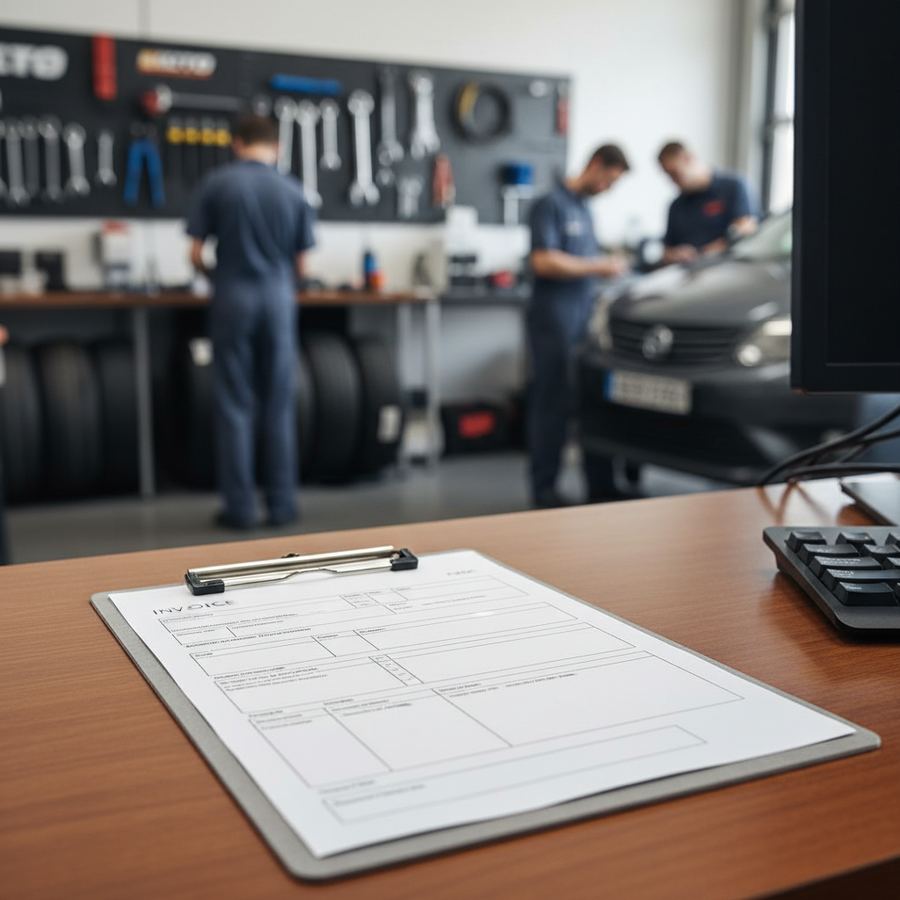
You drop off your car for a noise. A few hours later, the shop calls and says it needs $1,400 in work. You ask what that includes and get a vague answer about "front end stuff." You either approve it because you need the car, or you say no and drive away wondering what actually needed fixing.
That situation happens constantly, and it's almost always preventable. A clear, itemized estimate changes the entire dynamic between you and your shop.
What a Good Estimate Looks Like
A proper estimate breaks every recommended repair into its own line. Each line should include the specific part being replaced, the part cost, the labor time, and the labor cost. If the shop is recommending brake pads and rotors on the front axle, you should see "front brake pads" with a price, "front brake rotors" with a price, and a labor charge for the job. Not just "front brake job: $650."
Good estimates also separate the "must do now" items from the "should plan for soon" items. If your car needs front brakes today and rear brakes in six months, those should be presented with different urgency levels. A shop that lumps everything into one total is either lazy with their paperwork or hoping you won't question the number.
The best shops go further. They note whether they're using OEM, aftermarket, or used parts and why. They give you a total that matches the sum of the individual lines, not a rounded number that hides padding.
Why Vague Estimates Are a Problem
A vague estimate creates a situation where you can't make informed decisions. If someone tells you your car needs "$2,000 in suspension work," you have no way to evaluate that. Ball joints? Control arms? Struts? All three? Are the parts OEM or budget aftermarket?
Without details, you're stuck choosing between blind trust and walking away. Vague estimates also make it impossible to get a meaningful second opinion. If you take a one-line quote to another shop, they can't compare their assessment because there's nothing specific to compare against.
Red Flags in Repair Estimates
One lump sum with no breakdown. Any shop that can't or won't itemize the work is either disorganized or intentionally opaque. You don't want them working on your car.
"Miscellaneous" charges. Shop supplies and a small environmental fee are normal. A $200 "miscellaneous" line is not. Everything should have a name and a reason.
Labor time that doesn't match the job. A brake pad replacement on most cars takes about an hour per axle. If you're seeing three hours of labor for front pads only, something is off. Most shops use the same labor guides, so the numbers should be in the same neighborhood.
No part brand or source listed. If the estimate just says "water pump" with a price but doesn't say whether it's a $45 aftermarket pump or a $180 dealer part, ask. The difference between part sources matters in both cost and quality.
Pressure to approve everything immediately. A good shop gives you time to review and ask questions. If they're pushing for an answer while you're still on the phone, that's a sales tactic.
How to Read an Estimate Without Being a Mechanic
Focus on three things: what they're recommending, how urgent they say it is, and what it costs broken down by parts and labor.
If a line item doesn't make sense, ask about it. "What does this part do?" and "What happens if I wait on this?" are perfectly reasonable questions. If asking gets you attitude, that tells you something about the shop.
Compare the labor rate to local averages. Independent shops typically charge $100 to $160 per hour. Dealerships run $150 to $220. If a rate seems high, ask why.
What Modern Shops Do Differently
The best shops today send estimates electronically. You get a link on your phone with every line item, sometimes with photos of the actual problem. You can approve individual items, decline others, and see the total update in real time.
Modern shop management tools like ShopCommander make it easier for shops to present clear, itemized options. When the software handles the formatting and organization, the tech can focus on diagnosing the car instead of writing paperwork. The result is a better estimate that's easier for you to understand.
What You Should Expect
Every shop should give you a written estimate before doing any work. That estimate should include line items for every service, parts and labor separated, urgency for each item, and a clear total. If a shop isn't doing this, you have other options.
Finding a shop that communicates well is worth the effort. Once you have one, repairs become predictable instead of stressful. You can plan your repair budget around real numbers instead of guesses. And you stop dreading that phone call from the service desk.
Clear estimates aren't a bonus feature. They're the minimum standard for any shop that respects your time and your money.