Winter Tires vs All-Weather Tires in Ontario: What Actually Works
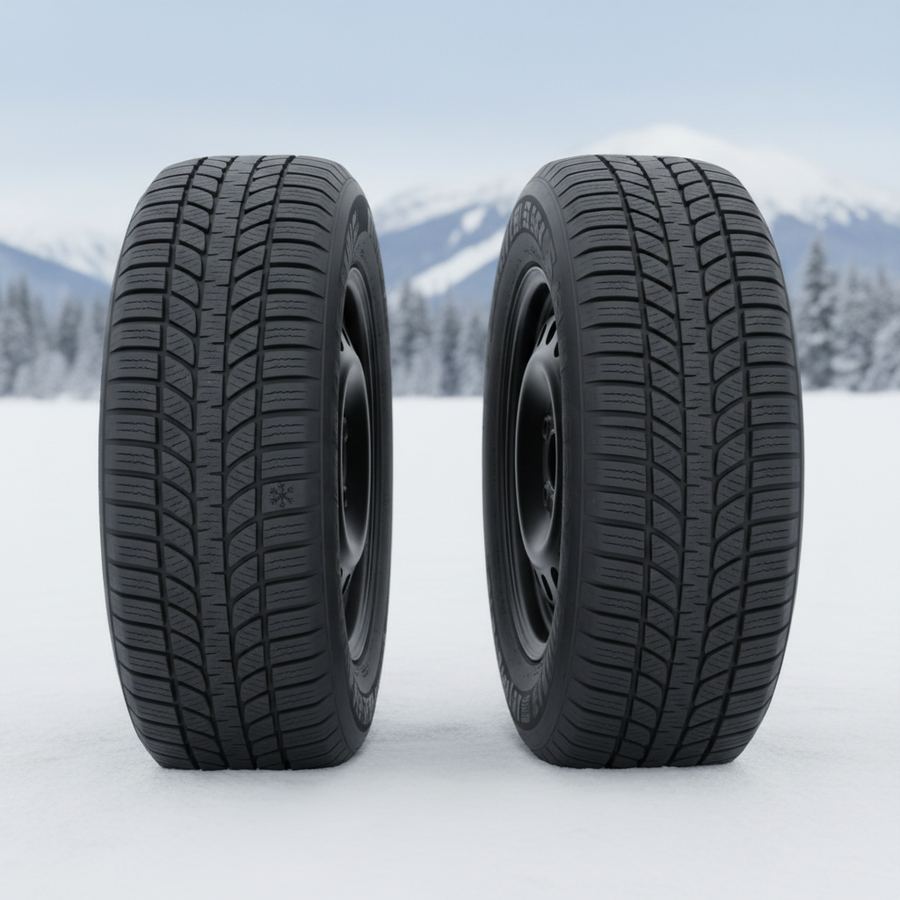
Every fall, Ontario drivers face the same question: winter tires or all-weather tires? The answer depends on where you live, how you drive, and how honest you are about your local weather. But before we get into that, let's clear up the single biggest source of confusion in this conversation.
All-Weather Is Not All-Season
All-season tires are the default rubber that comes on most new vehicles. Despite the name, they are three-season tires at best. The rubber compound in an all-season tire starts to harden once temperatures drop below about 7 degrees Celsius. Below freezing, they lose grip rapidly on any surface, dry pavement included. In snow or ice, they are functionally useless. Ontario has tried to nudge people away from all-seasons in winter through insurance discounts for winter tire use, and there's a good reason for that.
All-weather tires are a different product entirely. They use a rubber compound that stays pliable in cold temperatures and have tread patterns designed to handle snow. The key identifier is the three-peak mountain snowflake symbol (3PMSF) stamped on the sidewall. This symbol means the tire has passed a standardized snow traction test. All-season tires do not carry this symbol. If a tire doesn't have the snowflake, it's not rated for winter conditions, regardless of what the marketing says.
How Winter Tires Differ
Dedicated winter tires are engineered for one job: maximum grip in cold temperatures, snow, and ice. They use a softer rubber compound that remains flexible well below minus 30. The tread patterns feature deep, aggressive grooves and thousands of tiny slits called sipes that bite into snow and ice. Some winter tires also use specialized compounds or micro-particles to improve grip on ice specifically.
The result is noticeably better performance. In independent testing, winter tires consistently shorten braking distances on snow by 20 to 30 percent compared to all-weather tires, and by 40 percent or more compared to all-seasons. On ice, the difference is even larger. In a panic stop at 50 km/h on a snow-covered road, that extra stopping distance can be the difference between stopping safely and sliding into the intersection.
The trade-off is that winter tires wear fast in warm weather. The soft compound that grips in cold temperatures wears down quickly once temperatures climb above 10 degrees consistently. Running winters through summer will chew through a set in one season. That means seasonal changeovers, a second set of wheels or tires to store, and the cost and hassle of swapping twice a year.
How All-Weather Tires Fit In
All-weather tires try to split the difference. They carry the snowflake symbol, meaning they meet the minimum snow traction standard. They use a compound that handles cold better than all-seasons. And they're designed to stay on the vehicle year-round, eliminating the changeover cycle.
The compromise is that they don't do anything as well as a dedicated tire. In winter, they provide less grip than a true winter tire. In summer, they wear faster and offer slightly less dry grip than a good all-season. The tread life is typically shorter than either a dedicated winter or all-season because the compound is trying to work across a wider temperature range.
That said, all-weather tires have improved significantly in the last five years. Top options from Nokian, Toyo, and Continental test reasonably well in snow and perform adequately in warm weather. They are a legitimate option for certain drivers, not just a lazy compromise.
When All-Weather Makes Sense
All-weather tires work well for drivers in the milder parts of Ontario: the GTA, southwestern Ontario, and anywhere along the Lake Erie or Lake Ontario shoreline where snowfall is moderate and temperatures rarely stay below minus 15 for extended periods.
They also make sense if you fit this profile:
- You drive mostly in the city on plowed roads
- You don't commute on rural highways that get snow-packed
- You don't have storage space for a second set of tires
- You want to avoid twice-yearly changeover appointments and costs
- Your vehicle has stability control and you drive conservatively in bad weather
If that describes you, a good set of all-weather tires with the snowflake symbol will keep you safe through most Ontario winters without the seasonal swap.
When Dedicated Winters Are the Right Call
If you live in the snow belt, dedicated winter tires are not optional. Ottawa, Sudbury, Barrie, the Muskokas, and anywhere north of Highway 7 gets enough sustained cold and heavy snow that the performance gap between winter and all-weather tires becomes a real safety issue.
You also need dedicated winters if:
- You commute on unplowed or infrequently plowed roads
- You drive a rear-wheel-drive vehicle
- You do regular highway driving at 100+ km/h in winter conditions
- You tow or carry heavy loads in winter
- You want the shortest possible stopping distance on ice and snow
For these situations, nothing matches a real winter tire. The grip difference at highway speed on a snow-covered 400-series highway is substantial. It's the difference between maintaining control and hoping for the best.
Cost Comparison
A set of four mid-range winter tires runs $500 to $800 for most passenger cars and small SUVs. Installation and balancing add $80 to $120. If you buy a second set of steel wheels to mount them on, add $300 to $500 for the wheels, but then changeovers are cheaper and faster (swap-on-rims is typically $60 to $80 versus $80 to $120 for dismount-and-remount). The wheels pay for themselves in two or three seasons.
A set of all-weather tires costs about the same as winter tires, sometimes a bit more for the better brands. You skip the changeover costs entirely, and you don't need storage space. But the tread life is typically 60,000 to 80,000 km versus 100,000+ km for a good all-season, so you're replacing tires more often.
Over five years, the total cost usually works out surprisingly close. The winter-plus-summer setup costs more upfront but each set lasts longer because neither is being used year-round. The all-weather setup has lower upfront cost and no changeover fees, but you're buying new tires sooner. For most people, the decision should be based on safety needs and lifestyle, not just price.
One more thing: Ontario auto insurers are required to offer a discount (typically 3 to 5 percent) for winter-rated tires. Both dedicated winters and snowflake-rated all-weathers qualify. Keep your receipts.
Making the Decision
Be honest about your driving. If you work from home and only drive locally in a city that plows early and often, all-weather tires are a sensible choice. If you commute 50 km each way through areas that see lake-effect snow or sustained cold, dedicated winters are the safer investment. Nobody ever regretted having too much grip in February.
Whatever you choose, make sure the tires are the right size and properly matched as a set of four. Running mismatched winter or all-weather tires defeats the purpose. And keep an eye on tire age and condition regardless of type. A six-year-old winter tire has lost a meaningful amount of its cold-weather grip even if the tread looks fine.
For professional tire installation and seasonal changeovers, find a shop that checks alignment and balancing at the same time. Putting fresh rubber on a vehicle with worn tie rods or a knocked-out alignment just means you'll chew through the new tires unevenly. A good shop catches that during the swap and saves you money in the long run.
If you're also thinking about the full picture of getting your vehicle ready for cold weather, our seasonal vehicle prep guide covers the other items that matter beyond tires. And for a look at whether your current tires still have enough life in them, check our guide on when tires actually need replacing.