Used OEM vs. New Aftermarket vs. New OEM Parts: How to Decide
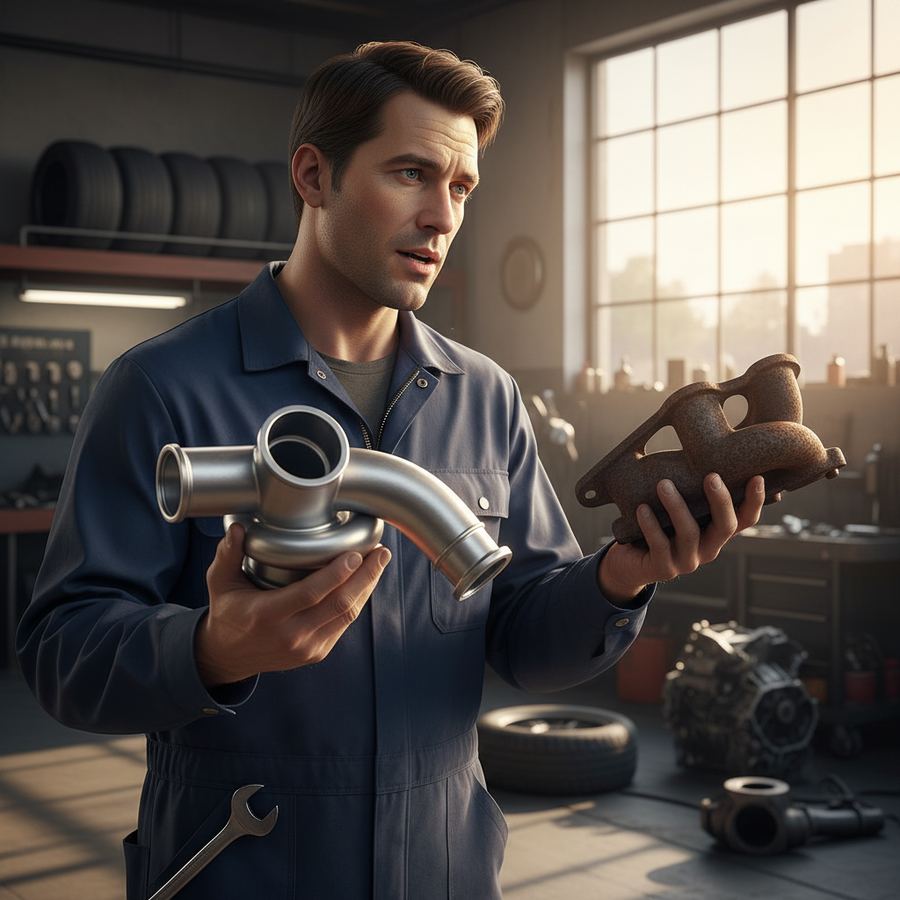
Your car needs a part. The shop gives you three options: a used OEM part from a salvage yard, a new aftermarket part, or a new OEM part from the dealer. The price difference between cheapest and most expensive might be $300 or more. So which one do you pick?
The answer depends on what the part is, how long you plan to keep the car, and what kind of risk you're comfortable with. None of these options is universally best.
Understanding the Three Options
Used OEM is a factory-original part pulled from a vehicle at a salvage yard. Same manufacturer, same specs as what's in your car. It just has miles on it.
New aftermarket is a brand-new part made by a company other than the original manufacturer. Quality varies wildly. Some aftermarket brands match or exceed factory quality. Others cut corners to hit a price point.
New OEM is a brand-new part from the original manufacturer, usually through a dealership. Identical to what came on the car. Almost always the most expensive option.
When Used OEM Makes Sense
Used OEM is the sweet spot for a lot of repairs on older vehicles. If your eight-year-old car needs a power window motor, a used unit from a similar vehicle works just as well as new. It was built to the same spec. Running for 60,000 km doesn't mean it's about to fail.
Used parts work especially well for components that don't wear out predictably: body panels, mirrors, trim, ECU modules, window regulators, headlight assemblies, intake manifolds. These either work or they don't.
The risk is trusting the salvage yard's assessment. Good recyclers test components before selling them. Less reputable ones sell as-is. Ask your shop where they source used parts and whether there's a warranty. Most legitimate recyclers offer at least 90 days.
Where used OEM falls short is with wear items. Used brake pads, used tires, used clutch discs have finite lifespans measured in remaining material. Paying installation labor on something that may need replacing again soon is rarely a good trade.
When New Aftermarket Makes Sense
Aftermarket quality spans an enormous range. A Moog ball joint is a quality product from a manufacturer with a reputation to protect. A no-name ball joint from the cheapest supplier is also technically aftermarket. The experience will be very different.
New aftermarket is the right call for wear items and maintenance parts. Brake pads, rotors, filters, belts, hoses, spark plugs: these are almost always fine from a reputable aftermarket brand. Quality manufacturers produce items meeting OEM specs at half the price.
Aftermarket also works when the OEM part had a known weakness. If a vehicle is known for failing water pumps, aftermarket manufacturers sometimes engineer an improved version. Your shop should know about these situations. For background on how part quality varies, the Consumer Reports auto section tracks reliability data that often traces back to parts quality.
The risk is buying cheap junk. Budget brake pads that squeal from day one. Suspension parts that wear out in 20,000 km instead of 80,000. The savings disappear when you're paying labor twice.
When New OEM Makes Sense
New OEM is the right choice for complex electronic modules, fuel injectors on direct-injection engines, and emissions components. The tolerances are tight, testing is thorough, and the cost of a failed part is too high to gamble on.
It also makes sense on newer vehicles under warranty. Using OEM parts protects your coverage and maintains resale value.
Engine and transmission internals (gaskets, seals, timing chain kits, head bolts) are another area where OEM usually wins. A $15 savings on a head gasket that fails at 30,000 km is the most expensive bargain you'll ever find.
The downside is cost. A dealer alternator might be $600 when a quality remanufactured unit is $200. For an older vehicle you're driving another two years, paying triple for the factory sticker doesn't always pencil out.
What Your Shop Should Tell You
A shop doing right by you explains the options for any significant repair. "We're using a Moog ball joint because it matches OEM spec and carries a lifetime warranty" is a good answer. "That's just what we use" is not.
They should be transparent about price differences. If the OEM water pump is $280 and aftermarket is $110, you deserve to know. You also deserve an honest opinion on whether the cheaper option is worth the risk. When used parts are recommended, your shop should explain the logistics and warranty terms up front.
A Quick Decision Framework
Wear items (brakes, filters, belts, plugs): New aftermarket from a quality brand.
Hard parts that rarely fail (motors, regulators, body panels, mirrors): Used OEM, especially on vehicles over five years old.
Engine and transmission internals: New OEM when possible.
Complex electronics: New OEM for newer vehicles. Used OEM for older vehicles when new parts are discontinued or priced beyond reason.
Suspension and steering: Quality aftermarket brands like Moog or TRW. Avoid bargain-bin brands.
Ask questions. Get clear estimates that identify the part source. Your car doesn't care about brand loyalty. It cares about whether the part fits, functions, and lasts.