Is Rust Proofing Worth It in Ontario?
The short answer is yes. In Ontario, annual rust proofing is one of the most cost-effective things you can do to extend the life of a vehicle. But that answer comes with conditions, and the people selling rust proofing are not always upfront about what those conditions are.
Rust proofing is not a magic shield. It does not make your vehicle immune to corrosion. What it does, when applied properly and consistently, is slow the process enough that your vehicle's structure outlasts its mechanical components. In a province that dumps millions of tonnes of salt on the roads every winter, that is worth paying for.
The Cost Is Not the Problem
Annual rust proofing at a reputable shop runs $120 to $180 for a car or small SUV, and $150 to $220 for a truck or larger vehicle. Over 10 years, that is $1,200 to $2,200 total. Compare that to the cost of losing the vehicle 3 to 5 years early because the subframe rotted through or the brake lines corroded to the point of failure.
A subframe replacement costs $2,000 to $4,000. Brake line replacement on a heavily corroded vehicle runs $800 to $2,000 depending on how many lines need to go and how much other hardware has to be replaced because the fasteners have rusted solid. Rocker panel and wheel well repairs start at $1,000 per side. These are costs you can realistically avoid or delay significantly with consistent rust proofing.
The math is not complicated. If annual rust proofing adds 3 years to a vehicle's life, you are getting $5,000 to $15,000 in additional use from a $1,500 investment. There are not many maintenance items with that kind of return.
When to Start
The best time to start rust proofing is when the vehicle is new or nearly new. Before salt has had a chance to work its way into seams, enclosed cavities, and spot welds, the treatment has the easiest job. Every surface is intact. Every coating is fresh. The product just needs to maintain what the factory already built.
Starting at year 3 or 4 still makes sense. The corrosion process is underway but probably has not reached structural components yet. The treatment can still access most cavities and slow things down considerably.
Starting at year 8 or 10 depends entirely on the vehicle's current condition. If the underbody is still solid with only surface rust, it is absolutely worth starting. If the subframe is already scaling, the brake lines are visibly pitted, and the rocker panels are soft, rust proofing will slow things but will not reverse the damage. At that point, you need to assess whether the vehicle has enough structural life left to justify the annual cost. A shop that inspects before applying is the only way to know for sure.
What It Protects
A proper rust proofing application targets the areas where corrosion causes the most expensive damage:
- Enclosed body cavities inside doors, rocker panels, quarter panels, and pillars where moisture collects and has no way to dry out
- Seams and spot welds where two pieces of metal overlap and salt water wicks in by capillary action
- Drain holes in doors and body panels that clog with debris, trapping water inside
- Brake and fuel lines that run along the underbody and are exposed to constant salt spray
- Subframe and frame rails that bear the structural load and cannot be cheaply replaced once compromised
- Wheel wells and fender lips where road spray hits hardest and stone chips expose bare metal
The common thread is that these are all areas you cannot easily see, clean, or maintain on your own. That is precisely why professional application matters. A garden hose and a can of spray from the auto parts store will not reach enclosed cavities or penetrate seam joints.
What It Cannot Save
Rust proofing has real limitations, and honest shops will tell you about them. It cannot reverse existing rust. If metal has already thinned or perforated, coating over it does not restore material. It can slow further deterioration, but the damage is permanent.
It cannot protect areas that are already packed with scale and debris. If the inside of a rocker panel is full of compacted rust and road grime, the treatment cannot penetrate through that to reach clean metal. On badly corroded vehicles, preparation work like cleaning and scraping is needed before treatment, and even then results are limited.
It also cannot compensate for physical damage. A stone chip through the paint on a quarter panel exposes bare steel. Rust proofing is not paint. If you notice chips and scratches, touch them up with paint before they become rust bubbles. Knowing where to look for early rust helps you catch these before they grow.
The Application Matters More Than the Brand
People spend a lot of time debating which rust proofing product is best. The product matters less than the application. An average product applied thoroughly to every cavity, seam, and drain hole will outperform a premium product that was sprayed quickly on the underbody and called done.
What to Look For
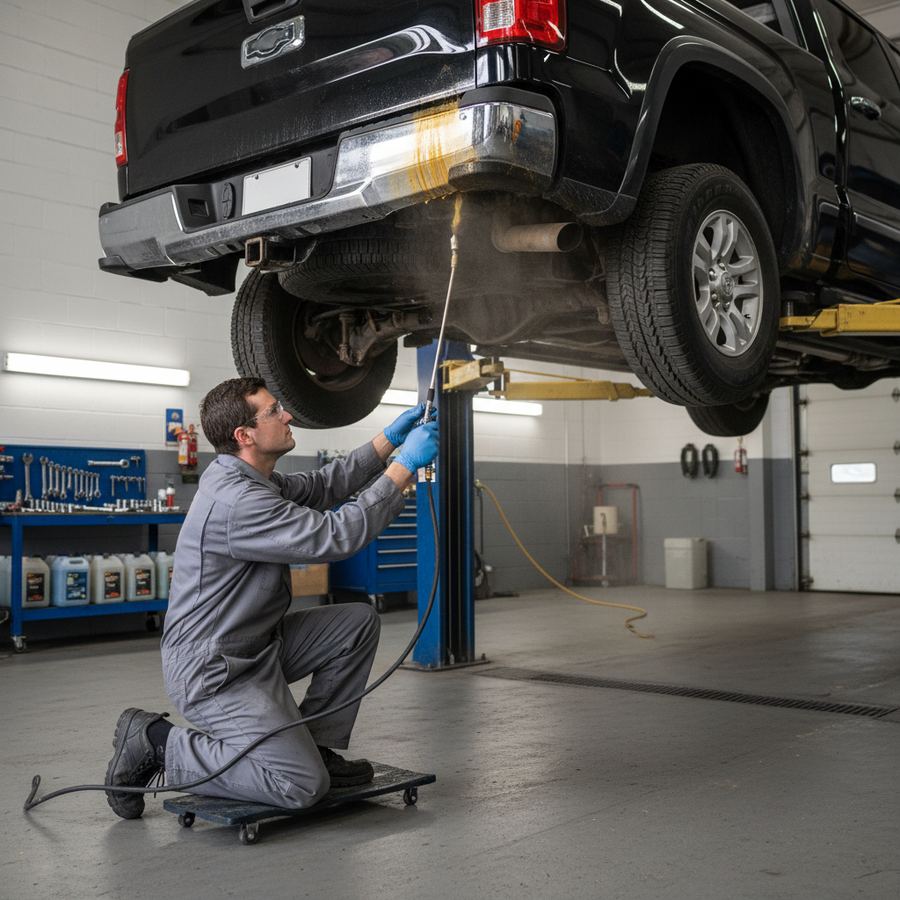
For professional rust proofing, look for a shop that applies product to drain holes, seams, and underbody panels, not just a quick spray. A proper application takes 30 to 45 minutes minimum. The technician should be working inside the wheel wells, spraying into door cavities through access holes, treating the underside of the hood and trunk lid, and coating all exposed lines and brackets underneath. If the whole job takes 10 minutes, you are paying for a mist, not a treatment.
Ask the shop whether they inspect the vehicle first. A shop that looks at the current condition before applying can tell you what areas need extra attention, whether there is existing damage that limits what the treatment can do, and whether the vehicle is a good candidate in the first place. That kind of honesty is worth more than the treatment itself.
The Honest Bottom Line
In Ontario, annual rust proofing is worth it for any vehicle you plan to keep longer than 5 years. The cost is small relative to the protection. The alternative is watching corrosion slowly destroy the structure your mechanical investment sits on.
It is not worth it if you lease short-term, if the vehicle is already structurally compromised, or if you plan to sell within a year or two. In those cases, your money is better spent elsewhere.
For everyone else, put it on the calendar every fall alongside your seasonal prep. Treat it like an oil change: not exciting, not optional, and dramatically cheaper than the alternative. The people who complain that rust proofing did not save their car are almost always the ones who started 8 years too late or went to a shop that did a 5-minute spray job. Done right, done consistently, and done early, it is one of the best investments you can make in a vehicle in this climate.
If you are trying to keep an older vehicle on the road and are weighing rust proofing against other repair budget priorities, it should be near the top of the list. A car with a solid body and aging mechanical parts can always be fixed. A car with a perfect engine and a rotted frame is heading for the scrapyard.