Oil Change Intervals: What Actually Matters in the Real World
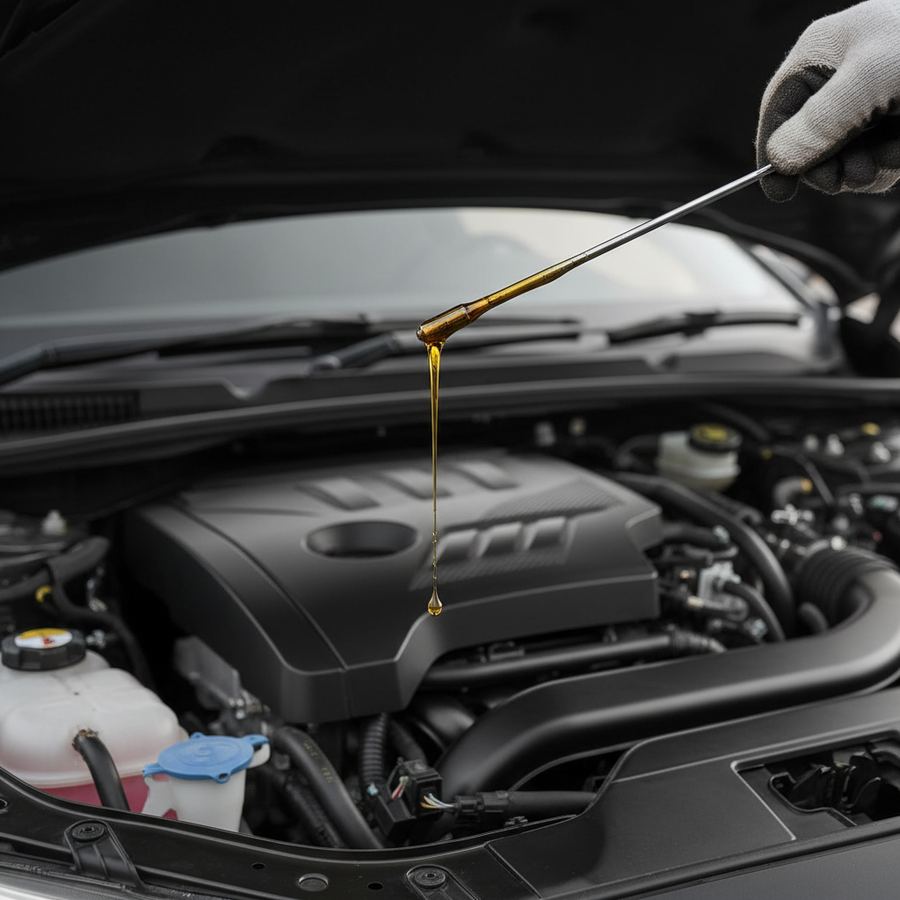
Every quick lube shop in the country wants you back every 3,000 miles. That little sticker in your windshield corner is doing marketing work, not engineering work. The 3,000 mile interval made sense decades ago with conventional oils and looser engine tolerances. It does not make sense for most drivers today.
That said, the people who say "just follow the owner's manual" are oversimplifying things too. Your driving conditions matter, and most people underestimate how hard they are on their vehicles.
Where the 3,000 Mile Myth Came From
Conventional motor oils in the 1970s and 1980s broke down faster. Filtration was worse. Engine tolerances allowed more combustion blow-by into the crankcase. Under those conditions, 3,000 miles was a reasonable interval.
Oil chemistry has improved dramatically since then. Base stocks are more refined, additive packages last longer, and full synthetic oils can handle heat and contamination far better than their predecessors. Most modern engines are also machined tighter, which means less fuel dilution in the oil.
Quick lube chains kept the 3,000 mile number because it brings customers back often. That is the entire reason. There is no engineering argument for it on a modern vehicle running quality oil.
Synthetic vs Conventional: A Real Difference
This is not marketing. Synthetic oil genuinely lasts longer than conventional oil under the same conditions. The base stock molecules are uniform in size and engineered for stability. Conventional oil is refined from crude and has more variation in molecular structure, which means it shears and oxidizes faster.
If you are running full synthetic in a modern engine, 7,500 to 10,000 miles is a reasonable interval for normal driving. Some manufacturers spec even longer. Toyota, for example, calls for 10,000 miles on many models with 0W-20 synthetic.
Conventional oil on a modern engine? Somewhere around 5,000 miles is more appropriate. Not 3,000, but not 10,000 either.
Synthetic blends split the difference. They are fine for people who want a middle ground on cost and interval. Around 5,000 to 7,500 miles is typical.
The Severe Service Schedule Nobody Reads
Every owner's manual has two maintenance schedules: normal and severe. Almost everyone assumes they fall under the normal schedule. Most people are wrong.
Severe service conditions include:
- Frequent short trips under 10 miles, especially in cold weather
- Stop-and-go city driving
- Dusty or gravel roads
- Towing or carrying heavy loads
- Extended idling
- Extreme heat or cold
If you commute 8 miles each way through city traffic, you are a severe service driver. If you let your car idle for 15 minutes warming up every winter morning, severe service. If you drive on gravel roads regularly, severe service.
Under severe conditions, cut your interval by about 40 percent. That means 5,000 to 6,000 miles on synthetic instead of 10,000. On conventional, you are back closer to 3,000 to 4,000 miles.
Oil Life Monitors: Mostly Useful
Many vehicles built after 2010 have oil life monitoring systems. These track engine RPM, temperature, cold starts, and driving patterns to estimate when the oil needs changing. They are not perfect, but they are better than a fixed interval for most people.
GM's system is one of the more sophisticated ones. It will sometimes go to 10,000 miles on highway drivers and drop to 4,000 miles on someone making short trips in cold weather. That is exactly the kind of adjustment most people should be making but do not.
The one catch: these monitors do not account for oil quality. They assume you put in what the manufacturer specified. If you used a cheaper oil or the wrong viscosity, the monitor has no way to know that.
What Actually Kills Oil
Oil does not just wear out from mileage. Time matters too. Even if you only drive 3,000 miles a year, you should change the oil at least once annually. Oil absorbs moisture from condensation, and the additive package degrades over time regardless of use.
The main enemies of motor oil:
- Heat breaks down the base stock and oxidizes additives
- Fuel dilution from short trips where the engine never fully warms up
- Moisture contamination from condensation, again worse with short trips
- Soot and combustion byproducts that overwhelm the detergent additives
- Shearing where viscosity improver molecules get physically torn apart
Notice how short trips show up repeatedly. A car that does 10 miles of highway driving per trip is far easier on oil than one doing 3 miles of city driving per trip, even at the same total mileage.
The Filter Matters Too
A cheap oil filter can undermine good oil. Filters vary widely in media quality, dirt-holding capacity, and bypass valve pressure. If you are running extended intervals on synthetic oil, use a filter rated for that interval. Brands like Wix, Mann, or the OEM filter are usually solid choices.
A bargain filter that bypasses at 10 PSI and holds half the dirt will let contaminated oil circulate through the engine well before your interval is up. It is false economy. The filter might cost $4 less, but if it shortens effective oil life by 2,000 miles, you saved nothing.
A Practical Schedule for Most People
If you want a straightforward answer, here it is:
- Full synthetic, normal driving: 7,500 miles or once a year, whichever comes first
- Full synthetic, severe service: 5,000 miles or 6 months
- Conventional, normal driving: 5,000 miles or 6 months
- Conventional, severe service: 3,500 miles or 4 months
These are conservative enough to protect the engine without throwing money away. If your manufacturer says longer and you trust the oil life monitor, go with their recommendation. Just be honest about your driving conditions.
Why This Matters for Your Budget
At $80 per oil change at a shop, the difference between every 3,000 miles and every 7,500 miles is real money over the life of a vehicle. Over 100,000 miles, that is 33 changes vs 13 changes. You save roughly $1,600 by using the correct interval instead of the sticker interval.
That money is better spent on maintenance that actually matters, like keeping up with your seasonal prep checklist or addressing common failures before they leave you stranded.
The right oil change interval is not about being cheap. It is about being accurate. Change the oil when it needs changing, not when a sticker tells you to, and not so late that you are gambling with engine wear. Read your manual, be honest about your driving habits, and use good oil and a good filter. That is the whole strategy.
If you are unsure whether your current interval makes sense, talk to an independent mechanic you trust. A shop that gives clear answers will not push unnecessary services. They will look at your driving conditions and give you a straight recommendation. That conversation alone can save you hundreds of dollars a year in maintenance you do not actually need.