When Maintenance Is Overkill: Services You Probably Don't Need
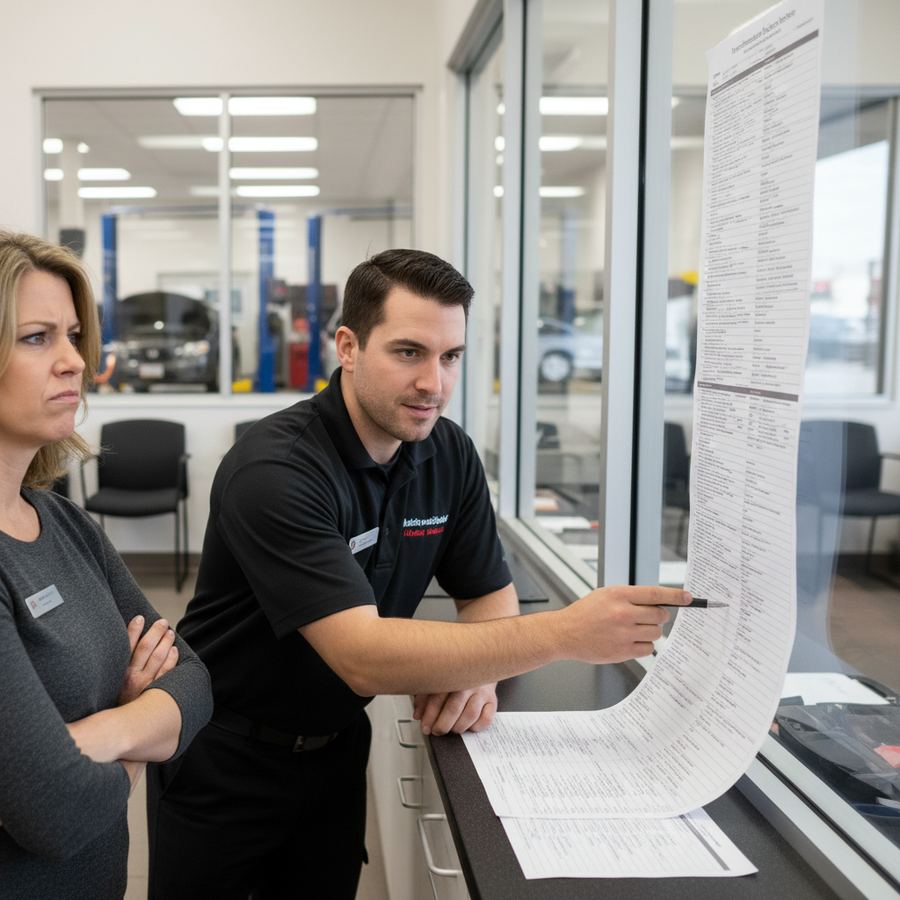
There is a difference between maintaining your car and over-maintaining it. Some services are genuine and keep your vehicle running. Others exist mostly to pad the invoice. The tricky part is that the oversold services often sound perfectly reasonable. A flush sounds like it should be helpful. Cleaning sounds like it should be helpful. But "sounds helpful" is not the same as "mechanically necessary."
Here is a practical look at the maintenance items that get pushed hardest and which ones actually deserve your money.
Transmission Flushes
This is probably the most oversold service in the industry. Quick lube shops push transmission flushes every 30,000 to 50,000 miles. Most modern automatics have fluid rated for 100,000 miles or the life of the vehicle. A standard drain and fill at the manufacturer's interval is usually all that is needed.
A full flush uses a machine to push new fluid under pressure. The problem is that this can dislodge debris settled in the valve body and push it into places where it causes shifting problems. Shops have created transmission issues with flushes that would not have existed otherwise. A drain and fill runs $150 to $200. A flush runs $250 to $400. You are paying more for a service that carries more risk.
What to do instead: Follow your manufacturer's interval. A drain and fill with the correct fluid spec is almost always the right call. If the fluid has never been changed on a high-mileage vehicle, talk to your mechanic. Sometimes the best answer is to leave it alone.
Fuel Injector Cleaning
Some shops recommend this at nearly every visit. The pitch: carbon deposits reduce fuel economy and performance. Modern fuel already contains detergent additives that keep injectors clean. Top-tier gasoline from major brands has even more. If you are using quality fuel, your injectors are probably fine.
Genuine injector fouling does happen, but it is usually a symptom of another problem like cheap gas or a misfire. The right fix is addressing the root cause, not running cleaning solution through the system.
What to do instead: Use top-tier fuel. If your car runs rough, get it diagnosed properly rather than guessing with a cleaning service. As a preventive service every 15,000 miles? Skip it.
Engine Flushes
An engine flush involves adding a solvent to the crankcase, running the engine briefly, then draining everything out. The idea is to dissolve sludge and varnish that has built up inside the engine.
On an engine with regular oil changes and no sludge issues, this is completely unnecessary. You are adding harsh chemicals to an engine that is already clean inside. There is nothing to remove.
On an engine with severe sludge from neglected maintenance, a flush can actually cause damage. Dissolving a large chunk of sludge can send it straight into an oil passage, blocking flow to a bearing or camshaft journal. That turns a dirty engine into a seized engine.
Engine flushes occupy an awkward space where they are unnecessary on well-maintained engines and risky on neglected ones. There is a very narrow window where they make sense, and a good mechanic will tell you that honestly.
What to do instead: Change your oil at the right interval with quality oil and a quality filter. That is all the "flush" your engine needs. If you bought a used car with unknown history and suspect sludge, switch to a shorter oil change interval with a good conventional oil. Let it clean gradually over several changes rather than shocking the system.
Coolant Flushes Every Year
Some shops recommend coolant flushes annually or every 30,000 miles. This was reasonable decades ago when most vehicles used conventional green coolant that degraded after two years. It is not reasonable now.
Modern long-life coolants, including the orange Dexcool, the pink/blue Asian formulas, and various European formulations, are designed to last 5 years or 100,000 to 150,000 miles. These extended-life coolants use organic acid technology (OAT) or hybrid organic acid technology (HOAT) that maintain their protective properties far longer than old-school silicate-based coolants.
Flushing and replacing coolant annually on a system designed for 5-year fluid is pure waste. That is 4 unnecessary services at $100 to $150 each.
What to do instead: Follow your owner's manual. Check the coolant level and condition periodically. If the coolant looks clean and tests at the right freeze point, leave it alone until the scheduled interval. When you do flush it, make sure the shop uses the correct specification for your vehicle.
Air Filter Replacement Every Oil Change
Many shops pull your engine air filter during an oil change and recommend replacement. Sometimes it genuinely needs it. Often it has another 10,000 miles of life and the shop makes $30 on a $10 filter. Air filters last 15,000 to 30,000 miles under normal conditions.
What to do instead: Check it yourself. Hold it up to light. If you can see light through the media, it still has life. Replace it per the manual or when it is genuinely dirty. Buy it yourself for $12 and swap it at home.
Cabin Air Filters and Power Steering Flushes
Cabin air filters get pushed at every service visit because they are pure profit. The filter costs the shop $8, they charge $40, and it takes 3 minutes to install. In reality, cabin filters last 15,000 to 25,000 miles. Replace them once a year or per the manual. On most vehicles, the filter is behind the glove box and takes two minutes to swap yourself for $15.
Power steering fluid does not break down the way engine oil does. On most vehicles it lasts the life of the car. Some manufacturers have no scheduled interval for it. Check the level and color periodically. If the fluid is dark or smells burnt, replacement might make sense. If it is still translucent and the steering feels normal, leave it. Many newer vehicles have electric power steering with no fluid at all.
How to Tell What Is Real
The pattern should be clear by now. Many of these oversold services involve fluids that do not degrade as fast as shops claim, or cleaning procedures that solve problems that do not exist.
Here is how to evaluate any recommended service:
- Check your owner's manual. If the manufacturer does not recommend it at that interval, ask why the shop does.
- Ask what problem it solves. "It is just good maintenance" is not a real answer. A specific symptom or a specific degraded fluid sample is a real answer.
- Consider the source. Shops that survive on volume and quick services have a financial incentive to recommend more. A shop that gives you clear, honest estimates is less likely to pad the bill.
- Look at the math. If a service costs $150 and provides no measurable benefit, that is $150 toward something that does matter, like a seasonal inspection or a repair that actually keeps your car reliable.
What Actually Deserves Your Money
Not everything is overkill. These services genuinely matter and are worth paying for on schedule:
- Oil and filter changes at the correct interval
- Brake inspections annually
- Tire rotations every 5,000 to 8,000 miles
- Coolant replacement at the manufacturer's schedule
- Timing belt replacement at the specified mileage (if applicable)
- Spark plug replacement per the manual
- Brake fluid flush every 2 to 3 years
Put your maintenance budget toward the items that prevent real failures. Skip the ones that mostly prevent an empty service bay. Your car will run just as well, and your wallet will be healthier for it. When in doubt, look at the numbers and make the call based on what your vehicle actually needs, not what a service menu says it should need.