Parts You Can Safely Buy Used
Not every part on your car needs to be brand new. Plenty of components are built to last well beyond the life of the vehicle they came from, and buying them used from a salvage yard or recycler can save you hundreds of dollars without sacrificing reliability. The trick is knowing which ones hold up and which ones don't.
I've been recommending used parts to customers for years. When someone balks at a $900 repair, showing them the same job at $450 with a quality recycled part changes the conversation. Here's what I'm comfortable putting on cars, and why.
Body Panels
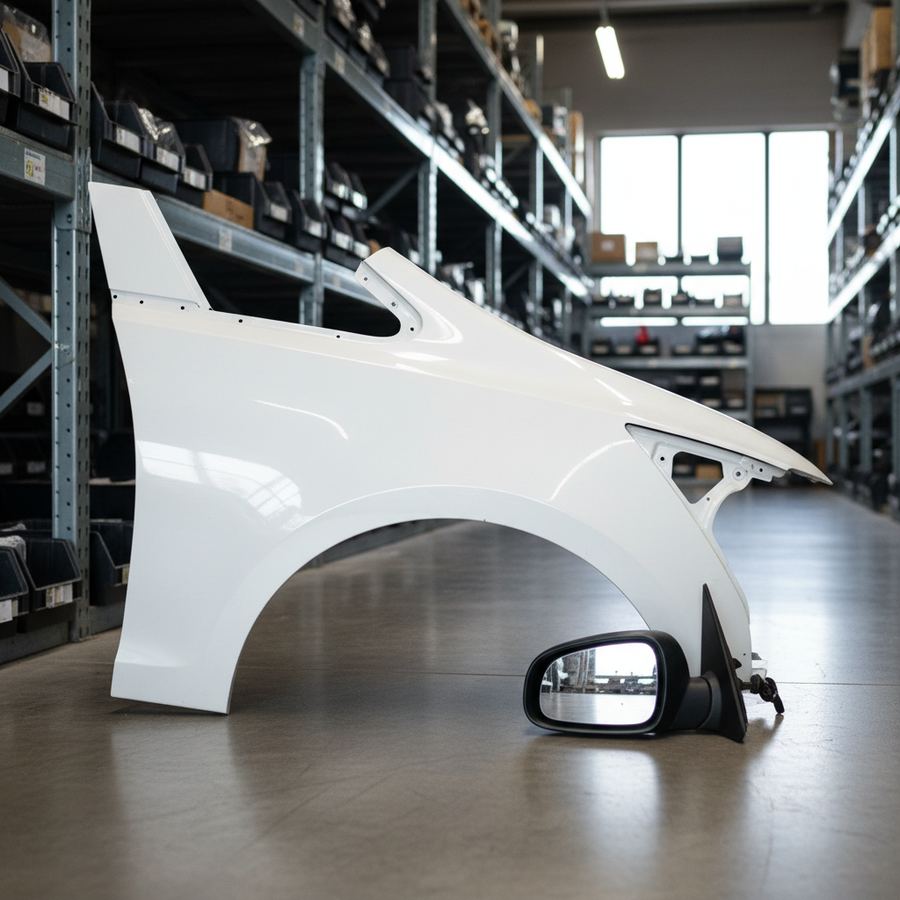
Fenders, doors, hoods, trunk lids, and bumper covers are some of the best parts to buy used. Sheet metal doesn't wear out from normal use. A fender from a 2018 Civic with 80,000 miles is structurally identical to a brand new one, as long as it hasn't been in a collision on that side.
The bonus with used OEM body panels is fitment. They were made for your exact vehicle, so bolt holes line up and gaps match. Aftermarket body panels are often slightly off, which means extra labor to fit them. If you can find a used panel in the right color, you skip the paint cost entirely and save even more.
Look for panels that are straight, rust-free, and haven't been previously repaired. A good recycler will note the condition honestly. Dents and scratches can be addressed, but previous Bondo work or welded repairs are a pass.
Mirrors
Side mirrors get broken constantly. Parking lots, passing trucks, and tight garages take them out all the time. A new OEM mirror assembly from the dealer might cost $300 to $600, especially on a newer vehicle with heating, turn signals, and blind-spot monitoring built in.
A used OEM mirror is the exact same unit. The glass is fine, the motor works, and all the wiring connects the same way. These are easy to test before installation, and the failure rate on used mirrors is very low. Just make sure the electronics work if it's a powered unit, and confirm the color or style matches your trim level.
Wheels
Alloy and steel wheels are extremely durable. Unless they've been curbed hard, bent from a pothole, or cracked from impact, a used wheel is functionally identical to a new one. Recyclers usually inspect them for cracks and runout before selling.
This is one of the biggest savings areas. A single new OEM alloy wheel can run $200 to $500. Used, the same wheel might be $60 to $150. If you're matching tires properly and need a replacement wheel after hitting a pothole, used is the obvious choice. Just have the shop check it for trueness before mounting a tire on it.
Alternators and Starters
These are workhorses. A typical alternator or starter is built to handle 150,000 miles or more. Pulling one from a vehicle with 70,000 miles means you're getting a unit with plenty of life left. Salvage yards typically bench-test these before sale, and most come with a 30 to 90 day warranty.
Alternators and starters are also simple to diagnose. A shop can test output and draw before installation to confirm the unit is healthy. If it passes the bench test, it's going to work. The failure mode on these is gradual, so a unit that tests good today isn't going to die next week.
The key is buying from a recycler that actually tests, not one that just pulls and ships. A shop that knows how to source recycled parts properly makes all the difference here.
Seats
A car seat is a car seat. The frame, foam, and upholstery don't degrade in ways that matter for most replacements. If you need to swap a torn or stained seat, a used one from the same model and trim level drops right in. The mounting points are identical, the harness connections are the same, and the seat tracks bolt up without modification.
Heated and powered seats work fine used. The motors, heating elements, and switches are reliable components. Match the color and material to your interior, and nobody will know the difference. This is especially useful for keeping an older car presentable without spending new-part money.
Glass
Windshields, side windows, and rear glass are all available used. OEM glass has the correct tint, thickness, and curvature. Aftermarket windshields can have distortion issues, and the fit is sometimes off enough to cause wind noise or leaks.
Side and rear glass are especially good used buys because they're either intact or they're not. No partial failure. Windshields are worth inspecting more carefully for pitting and micro-chips, but salvage yards with good inventory usually pull these from low-mileage vehicles. A new OEM windshield with installation can hit $500 to $1,200. Used OEM glass cuts that significantly.
Interior Trim
Dashboard pieces, console covers, door panel inserts, speaker grilles, and cup holder assemblies. These are the plastic and fabric bits that crack, fade, or break from sun exposure and daily use. A replacement from a vehicle that was garaged or had less sun damage can freshen up your interior for very little money.
Trim pieces are also hard to find aftermarket. Many interior components are only available from the dealer at ridiculous markups or from salvage yards. Used is often the only practical option for a piece that's been discontinued or was never made by aftermarket suppliers.
AC Compressors
Air conditioning compressors are durable units that typically fail from seal degradation or clutch wear. A used compressor from a vehicle where the AC system was still working is a solid replacement. Have the shop check for clutch engagement and shaft play before installation.
The compressor is usually the most expensive single part in an AC repair. New units run $300 to $800. A used one at $100 to $250, tested and confirmed working, brings the total repair bill down to something reasonable. The rest of the AC service (receiver-drier, evacuation, recharge) uses new parts regardless.
Exhaust Components
Catalytic converters, mufflers, and exhaust manifolds from recyclers can save significant money. Catalytic converters in particular have skyrocketed in price. A used one that still passes emissions testing is a fraction of the cost of new.
Check for internal rattling on catalytic converters, as the substrate can break down. Mufflers should be free of rust-through. Exhaust manifolds need a crack inspection, especially on engines known for manifold issues.
What Makes a Used Part a Bad Buy
Not everything ages well. There are parts you should always buy new because their function depends on being in unused condition. Rubber degrades with age, friction materials wear by design, and gaskets harden over time. Those aren't candidates for recycled sourcing. Buying from a reputable recycler with testing capability and a return policy matters more than finding the lowest price.
Buying Smart
When you're looking at a repair estimate and the parts cost is steep, ask your shop about used OEM options. A good shop will already be considering this for parts where it makes sense. The OEM vs aftermarket decision gets a lot easier when you realize that a third option exists: original quality, proven reliable, at recycled pricing.
Used parts aren't second-rate. They're practical. And on a vehicle you're keeping for a few more years, they're often the smartest money you can spend.