Parts You Should Always Buy New
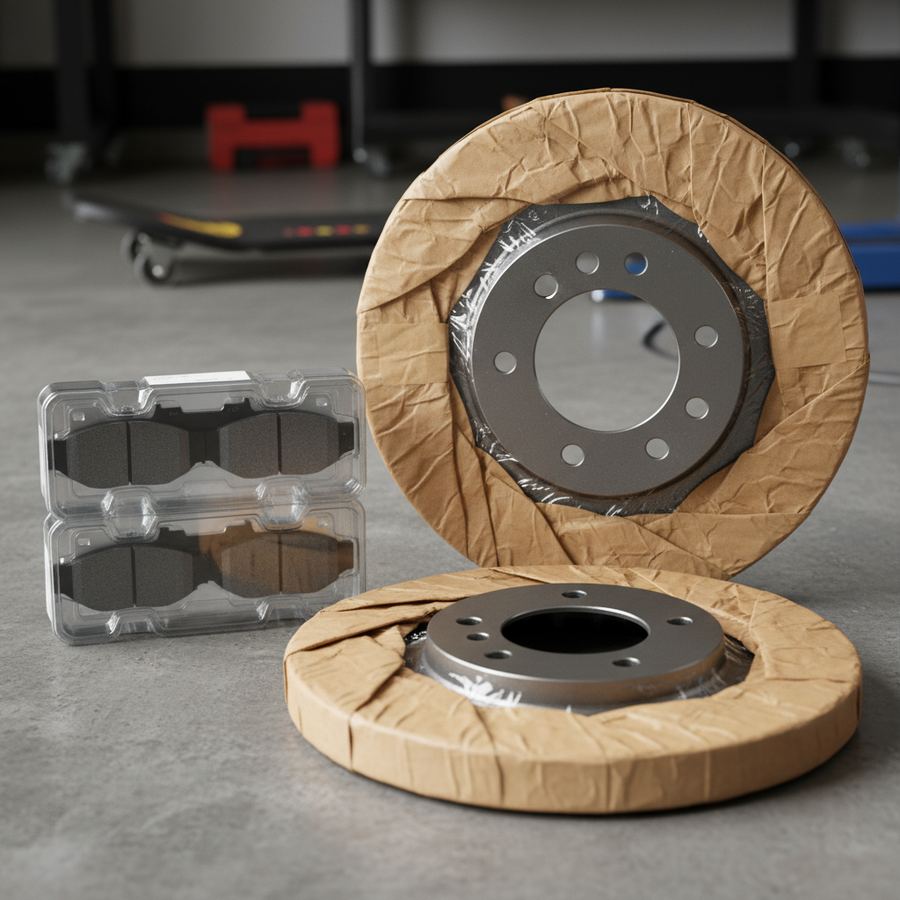
Used parts can save you real money on a lot of repairs. But not every component is a good candidate for recycled sourcing. Some parts exist specifically to wear down, seal tight, or filter contaminants, and their ability to do that job depends entirely on being in new condition.
Putting a used brake pad on a car is like buying a half-eaten sandwich. Technically it's still food, but you're missing the point. Here's the full list of parts I tell every customer to buy new, and why the savings aren't worth the compromise.
Brake Pads
Brake pads are a friction material designed to wear away over time. That's literally how they work. The pad surface presses against the rotor, converts kinetic energy to heat, and gradually sacrifices itself in the process. A new pad has 10 to 12 millimeters of material. A used one has whatever's left, which you often can't accurately assess until it's installed.
Beyond the remaining thickness, used pads may have been overheated, glazed, or contaminated with brake fluid from a leaking caliper. Glazed pads have a hardened surface that reduces stopping power. You can't always see this by looking at them. The cost of a set of quality brake pads is $30 to $80. There's no rational reason to buy these used.
Brake Rotors
Rotors wear alongside the pads. They develop grooves, hot spots, and thickness variation from normal use. A rotor that looks fine visually might be below minimum thickness or warped enough to cause pulsation during braking.
Used rotors can be machined to restore the surface, but you're starting with less material than a new rotor. That means less heat capacity and a shorter remaining life. Given that quality aftermarket rotors run $30 to $80 per wheel, this is another part where new just makes sense. Pairing new pads with a used rotor also leads to uneven bedding, which reduces braking performance right from the start.
Brakes are not the place to save money. This is the most important safety system on your car. If you're watching your repair budget, cut costs somewhere else.
Timing Belts
A timing belt is a rubber belt with teeth that keeps your engine's camshaft and crankshaft synchronized. It stretches, cracks, and degrades from heat exposure and age. Most manufacturers recommend replacement between 60,000 and 105,000 miles, or every 7 to 10 years, whichever comes first.
A used timing belt has unknown mileage, unknown age, and invisible internal degradation. If a timing belt breaks on an interference engine, the pistons hit the valves. That turns a $500 to $900 belt job into a $3,000 to $5,000 engine repair, or a complete engine replacement. Nobody should be gambling on this part.
The same goes for the tensioner and idler pulleys that go with it. Always replace the full timing belt kit together with new components. A failed tensioner will take out a new belt just as fast.
Water Pumps
Water pumps circulate coolant through your engine to prevent overheating. They have an internal impeller, bearings, and a seal. All three wear over time. A water pump that's "still working" from a salvage engine might have bearings that are six months from failure or a seal that's about to weep.
Most water pumps get replaced along with the timing belt because they share the same service interval and the labor overlaps. Putting a used water pump in during a timing belt job to save $50 on the part is a terrible trade. If the pump fails later, you're paying to pull everything apart again. Always go new here.
Gaskets
Gaskets are single-use sealing components. Head gaskets, intake manifold gaskets, valve cover gaskets, oil pan gaskets. Once they've been compressed between two surfaces, they're shaped to that specific pairing. Removing them and reusing them almost always results in a leak.
Even a gasket that "looks fine" has taken a compression set. The material has conformed to every tiny imperfection in the mating surfaces it was sandwiched between. Put it on a different engine with different surface imperfections and it won't seal properly. Gaskets are cheap relative to the labor involved in replacing them. A $15 valve cover gasket is nothing compared to the hour of labor to install it. Always use new.
Filters
Oil filters, air filters, cabin air filters, fuel filters, transmission filters. These exist to trap contaminants. A used filter has already trapped contaminants. Installing one is like putting a dirty paper towel back in service.
This should be obvious, but I mention it because I've seen it happen. Someone pulls an air filter from a junkyard engine thinking it looks clean enough. It's not. Filters are some of the cheapest parts on your car. Replace them on schedule with new ones and don't think twice about it.
Tires (Usually)
This one comes with a caveat, because there are situations where used tires work. But in general, tires should be bought new. Rubber compounds degrade with age regardless of tread depth. Internal damage from impacts, underinflation, and heat cycles isn't visible from the outside. A tire that looks fine could have belt separation developing inside.
Tread depth is measurable, but tire age and condition are harder to assess. A tire with 6mm of tread that's eight years old is not a safe tire. The rubber has hardened, wet grip has dropped significantly, and blowout risk has increased. For most drivers, new tires from a reputable brand are the right call.
Suspension Bushings
Control arm bushings, sway bar end links, strut mounts, and subframe bushings are all rubber or polyurethane components that deteriorate with age and use. They crack, compress, and lose their ability to isolate vibration and maintain alignment geometry.
A used bushing has already started this degradation process. It may look intact, but the rubber has taken a permanent set and lost elasticity. Bushings are cheap parts, often $20 to $60 for a set. The labor to press them in is the expensive part. Save yourself the repeat job and use new bushings every time.
Serpentine Belts and Hoses
Serpentine belts stretch, crack on the rib surfaces, and lose grip over time. Used belts have unknown remaining life and may have been exposed to oil or coolant contamination that accelerates wear.
Radiator hoses, heater hoses, and turbo hoses follow the same pattern. They soften, swell, and develop weak spots from the inside out. A burst hose while driving causes rapid overheating and potentially serious engine damage. New hoses run $10 to $40 each. Just replace them.
The Common Thread
Everything on this list falls into one of three categories: it wears by design (brake pads, filters), it degrades with age regardless of use (rubber components, belts, hoses), or it's a one-time-use sealing component (gaskets). These are the parts where "still working" doesn't mean "has meaningful life left."
There's a whole list of parts that are perfectly fine to buy used. Body panels, alternators, mirrors, seats, glass. The savings on those items are real and the reliability is solid. But the parts on this page need to go on fresh. The cost difference between new and used on most of these is small, and the consequences of failure range from annoying to dangerous.
If a shop recommends a used brake pad or a recycled timing belt, find a different shop. That's not a cost-saving recommendation. That's a sign that they don't understand which failures matter and which corners are safe to cut.