What Actually Matters When Buying New Tires
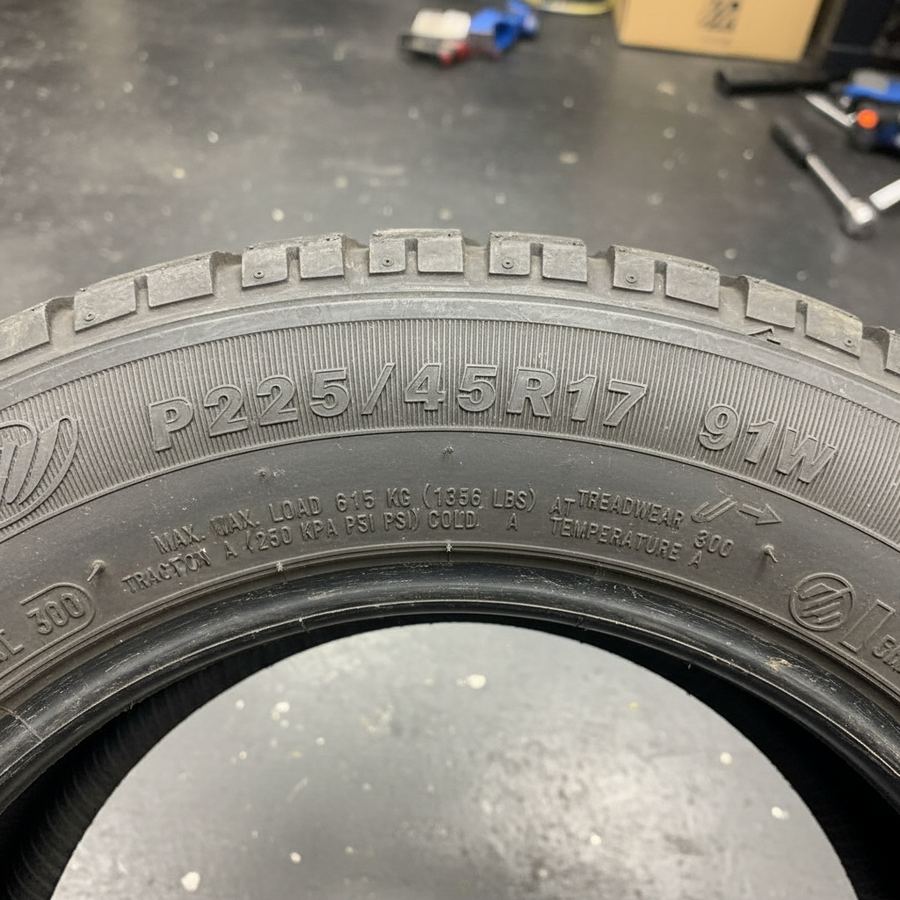
Buying tires should be straightforward. You need four round rubber things that fit your car and grip the road. But the moment you start shopping, you're hit with dozens of options, spec sheets full of numbers, and marketing that makes every tire sound like it was engineered for Le Mans. Most of that noise doesn't matter. Here's what does.
How to Read a Tire Size
Every tire has a size code on the sidewall that looks something like 215/60R16 95H. Each part of that code tells you something specific.
215 is the section width in millimetres. That's how wide the tire is from sidewall to sidewall when mounted and inflated.
60 is the aspect ratio. It's the height of the sidewall expressed as a percentage of the width. A 60-series tire has a sidewall height that's 60 percent of 215 mm, which is 129 mm. Lower numbers mean a shorter, stiffer sidewall. Higher numbers mean a taller, more cushioned ride.
R means radial construction, which is what virtually every passenger tire uses today.
16 is the wheel diameter in inches. This must match your wheel exactly. You cannot mount a 16-inch tire on a 17-inch wheel.
95 is the load index. This number corresponds to the maximum weight the tire can support at its rated inflation pressure. A load index of 95 means 690 kg per tire. Your vehicle's required load index is on the sticker inside the driver's door jamb.
H is the speed rating. This indicates the maximum sustained speed the tire is designed to handle safely. H means 210 km/h. For most daily drivers, this isn't about how fast you plan to drive. It reflects the tire's construction quality and heat management at sustained speeds.
Your correct tire size is printed on the driver's door jamb sticker and in your owner's manual. Use that, not whatever is currently on the car (the previous owner might have put on the wrong size).
The Specs That Actually Matter
Correct Size
This is non-negotiable. The right width, aspect ratio, and wheel diameter ensure your speedometer is accurate, your ABS and traction control work correctly, and the tire physically fits without rubbing on suspension or fender components. Close enough is not good enough. A tire that's one size off can cause handling problems and throw off your vehicle's electronic safety systems.
Load Rating
Never go below the load index specified for your vehicle. You can go equal or higher, but never lower. This is especially critical on SUVs, crossovers, and any vehicle that carries heavy loads or tows. A tire rated below your vehicle's requirement will overheat under load and can fail. The load index is a safety specification, not a suggestion.
Speed Rating
Match or exceed your vehicle's specified speed rating. Dropping below it saves a few dollars per tire but changes the sidewall stiffness and handling characteristics. On a vehicle that was engineered to handle with an H-rated tire, putting on a T-rated tire (lower) makes the steering feel vaguer and the cornering less precise. For most commuter cars, matching the OEM rating is fine. There's no need to go higher unless you're tracking the car.
Traction Grade
Every tire sold in North America gets a UTQG (Uniform Tire Quality Grading) rating with three components: treadwear, traction, and temperature. The traction grade measures wet braking performance on a standardized surface. Grades run from AA (best) down through A, B, and C.
For any vehicle driven in rain, you want an A or AA traction grade. Most decent tires meet this standard. Budget tires with a B rating save money on the sticker but cost you stopping distance when the road is wet. That's a trade-off you should make consciously, not accidentally.
Treadwear Rating
The treadwear number on the UTQG rating gives you a relative measure of how long the tire should last. A tire rated 400 should last twice as long as one rated 200 under the same test conditions. The actual mileage you get depends on your driving, roads, and maintenance, but the treadwear number is useful for comparing tires against each other.
A tire with a treadwear rating of 300 that costs $80 might seem cheaper than one rated 500 at $100, but the math says otherwise. The higher-rated tire gives you more kilometres per dollar. This is one of the most useful numbers for comparing budget tire options objectively.
What Matters Less Than You Think
Brand Loyalty
People get attached to tire brands the way they get attached to motor oil brands. "I only run Michelin" or "Bridgestone is the only tire I trust." Brand loyalty is fine, but it can lead you to overspend when a comparable tire from a less-marketed brand performs equally well in independent testing.
Brands like Hankook, Falken, General, Continental, and Kumho consistently perform well in Consumer Reports and Tire Rack testing at lower price points than the big-name premium tires. What matters is the specific model's test results, not the name on the sidewall. A midrange Continental might outperform a bottom-tier Michelin in wet braking while costing 30 percent less.
Sidewall Aesthetics
Raised white letters, aggressive sidewall designs, and stylized branding have zero impact on performance. If you like the look, go for it. But don't pay extra for cosmetic features that don't change how the tire grips, wears, or handles.
Marketing Categories
Tires marketed as "touring," "performance touring," "grand touring," or "ultra-high performance" have meaningful differences in construction, but the names themselves are not standardized. One manufacturer's "performance touring" is another's "grand touring." Focus on the actual specs, UTQG ratings, and independent test results rather than the category name on the box.
Where to Look for Real Information
Independent testing from Consumer Reports and Tire Rack provides objective data on braking distances, tread life, noise, and handling. User reviews on Tire Rack are also useful because they come from people who have driven on the tires for tens of thousands of kilometres and can report on real-world tread life and performance degradation.
Once you know your tire size and the specs you need, comparing options becomes straightforward. Filter by size, check the UTQG ratings, read a few reviews, and buy the tire that fits your driving and your budget. You don't need to spend weeks on research. An hour of homework prevents buying the wrong tire or overpaying for features you'll never use.
Installation Matters Too
A good local tire service can help you pick the right tire for your driving and your budget without overselling. Beyond that, proper installation includes balancing, setting correct inflation pressure, and ideally checking the alignment. New tires on a car with bad alignment will wear unevenly from day one. A shop that catches an alignment issue during installation saves you from burning through a new set prematurely.
Always buy in sets of four when possible, or in matched pairs per axle at minimum. Check the DOT date code on the sidewall before accepting the tires. You want a manufacture date within the last year or two. A "new" tire that was manufactured three years ago has already used up a chunk of its usable life. For more on that, see our guide on tire age and condition.
Tires are a straightforward purchase once you strip away the noise. Get the right size, meet or exceed the load and speed ratings, check the traction and treadwear grades, and buy from a source with a good return policy and warranty. That's it. Everything else is preference, not necessity. If you're replacing tires because of wear, our guide on when to replace your tires can help you figure out whether you need new rubber now or can plan for it over the next few months.