Repair vs Replace: When Fixing Your Car Still Makes Sense
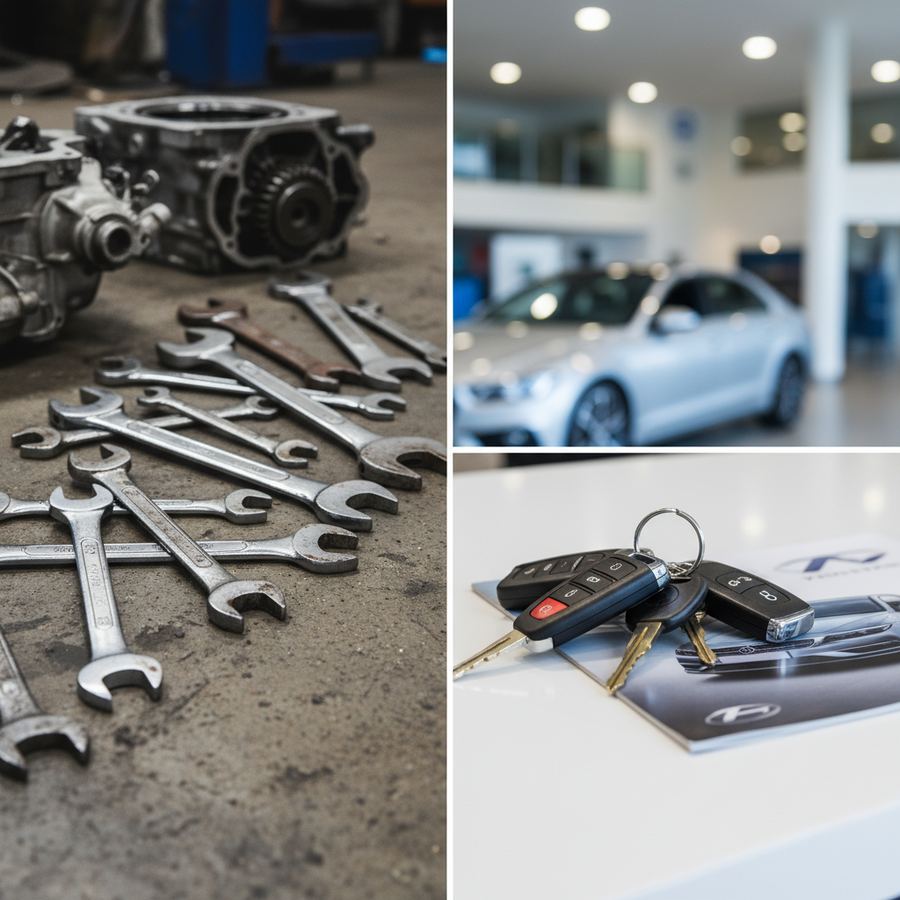
Your car needs a $2,000 repair. The car is only worth $4,000. Your first instinct is that spending half the car's value on a repair does not make sense. Time to buy something else.
That instinct is wrong more often than people think. The repair-vs-replace decision is one of the most common financial mistakes car owners make, and it almost always costs more to replace than to repair. The math just does not work the way it feels like it should.
The Real Comparison
People compare the repair cost to the car's market value. That is the wrong comparison. What you should compare is the repair cost to the cost of acquiring a replacement vehicle.
If your car is worth $4,000 and needs $2,000 in work, you are not choosing between $2,000 and $4,000. You are choosing between:
- Option A: Spend $2,000. Keep a car you know, with a known history, that runs well after the repair.
- Option B: Spend $8,000 to $12,000 on a used replacement (because a $4,000 replacement puts you right back in the same situation). Plus tax, registration, and possibly higher insurance. Plus the risk of unknown problems on the replacement vehicle.
When you frame it that way, the $2,000 repair usually wins by a wide margin.
The Known vs Unknown Factor
Your current car is a known quantity. You know what has been replaced, what has been maintained, and how it has been driven. After a $2,000 repair, you have a vehicle with fresh parts in the area that failed and a history you understand.
A used replacement is a gamble. Even with a pre-purchase inspection, you cannot see everything. The transmission might be on its way out. The engine might burn oil. The previous owner might have skipped maintenance for 30,000 miles. You are trading a known problem for unknown ones.
This is especially true in the $5,000 to $10,000 used car market, which is where most people end up shopping when they abandon a $4,000 vehicle. Cars in that price range all have mileage on them, and any of them could need their own $2,000 repair within the next year.
When the Repair Makes Sense
The repair is usually the right call when:
- The rest of the vehicle is in reasonable shape (no major rust, other systems working)
- The repair addresses a specific failure, not a cascade of problems
- The car still meets your needs (reliable enough for your commute, fits your family, etc.)
- The repair cost is less than 6 to 12 months of car payments on a replacement
- You are not also facing other major repairs in the near term
A $2,000 repair that buys you another 2 to 3 years of reliable driving is one of the best deals in automotive ownership. That works out to $55 to $85 per month in depreciation-equivalent cost, far less than any car payment.
When the Math Stops Working
There are situations where repairing no longer makes financial sense:
- Stacking repairs. If you just spent $1,500 on brakes and suspension, and now the transmission is going, the cumulative cost changes the equation. One big repair is fine. Three big repairs in six months is a pattern.
- Structural rust. If the subframe, frame rails, or floor pans are rotted, no mechanical repair matters. The car is structurally compromised. Fixing the engine on a car with a rusted subframe is throwing money away.
- The repair exceeds the replacement cost. Not the car's value, but the realistic cost of a comparable replacement after taxes and fees. If you can genuinely buy something equivalent for less than the repair, that is worth considering.
- Safety concerns. If the vehicle has fundamental safety issues beyond the current repair, like airbag problems, serious electrical faults, or frame damage from a previous accident, the math is secondary.
- Reliability needs have changed. If you just took a job with an 80-mile daily commute and your 18-year-old car is developing multiple issues, the risk profile has changed even if the immediate math says repair.
The Sunk Cost Trap
On the flip side, do not keep repairing a car just because you have already spent a lot on it. Previous repair costs are gone. They do not factor into the next decision. Each repair needs to stand on its own as a reasonable investment in continued transportation.
If you spent $3,000 on an engine last year and now the transmission needs $2,500, the fact that you just put an engine in is not a reason to fix the transmission. It might still be the right call, but evaluate it fresh. A car that needs a new major component every year is telling you something.
How to Evaluate the Decision
Here is a practical framework:
- Get a thorough inspection. Before deciding on the current repair, have the shop look at everything else. You need to know if this is a single repair or the start of a list. A good digital inspection with photos gives you the full picture.
- Price the repair honestly. Get a real quote, not a guess. Include parts and labor. Ask about warranty on the work.
- Price the replacement honestly. Look at what comparable vehicles actually sell for. Add tax, registration, and insurance changes. Budget $500 to $1,000 for things you will discover in the first year of ownership.
- Compare monthly cost. Divide the repair cost by the number of months you expect it to buy you. Compare that to the monthly cost of financing or saving for a replacement.
- Factor in what you know. Your current car's full history vs the uncertainty of a used purchase is worth real money, even if it does not show up on a spreadsheet.
Getting an Honest Assessment
The hardest part of this decision is getting straight information. A shop that wants to sell you the repair will tell you to fix it. A dealer that wants to sell you a new car will tell you it is not worth fixing. What you need is someone who will look at the whole vehicle and give you honest numbers. A good independent shop like Auto Solve can help you weigh the real numbers without an agenda pushing you either direction.
The Bottom Line
Most of the time, repairing a running vehicle is cheaper than replacing it. The break-even point is further out than most people assume. A $2,000 repair on a $4,000 car is not a bad deal. It is often the best deal available.
Where it stops making sense is when repairs are stacking up, when structural issues undermine the vehicle's future, or when the total cost of continued repairs exceeds what a better vehicle would cost you per month. Stay objective, do the math, and do not let the emotional side of the decision drive the financial one.
If you are on the fence, the best investment is a comprehensive inspection from a mechanic you trust. A $100 inspection that gives you the full picture of what the car needs over the next two years is the cheapest way to make the right call. Combined with understanding which repairs are worth doing and the cheapest way to keep a car on the road, you can make this decision with confidence instead of guesswork.