Ontario Winter Driving: Complete Vehicle Prep Guide
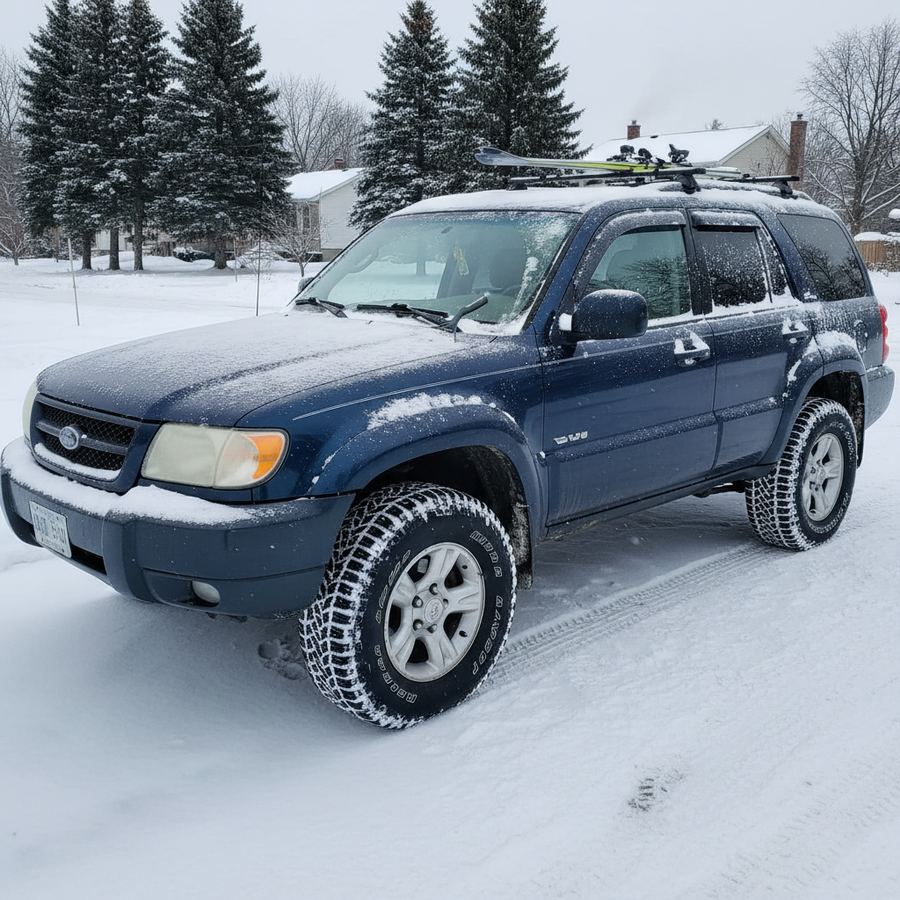
Ontario winter is not a suggestion. From November through March, you're dealing with ice, snow, road salt, sub-zero starts, and driving conditions that expose every weakness in a vehicle. Preparing for it isn't complicated, but skipping the prep is how people end up stranded at minus 20 with a dead battery and bald tires. Here's the full checklist, in order of what matters most.
Tires: The Single Most Important Item
Nothing else on this list matters as much as what rubber is on your wheels. Winter tires on a front-wheel-drive economy car will outbrake and outhandle all-season tires on an all-wheel-drive SUV in snow and ice. This is not an exaggeration. It's been proven repeatedly in controlled testing.
If you can swing it, run dedicated winter tires from November through March or April, depending on when temperatures consistently stay above 7 degrees Celsius. The rubber compound in winter tires stays flexible in cold temperatures. All-season compounds harden below 7 degrees, which means they lose grip on dry pavement in cold weather, not just on snow and ice.
If dedicated winters don't fit your situation, all-weather tires with the three-peak mountain snowflake symbol are a legitimate alternative for milder parts of the province. They carry a legal winter rating and provide better cold-weather grip than all-seasons, though they don't match dedicated winters in deep snow. For a full comparison of both options and when each makes sense, read our winter vs all-weather tire breakdown.
Whatever you choose, check the tread depth. Below 5/32", winter traction drops significantly. A tire that passed last spring might not be adequate for another winter. And check the manufacture date. Winter tires older than five or six years have lost cold-weather grip even if the tread looks fine.
Battery: The Second Most Common Failure
Cold weather is brutal on batteries. The chemical reaction that produces electricity slows down as temperature drops, while your engine demands more cranking power because the oil is thicker. More demand, less capacity. That's the recipe for a no-start morning.
Most car batteries last 4 to 5 years in moderate climates and 3 to 4 years in Ontario. If yours is in that range, get it load tested before the cold hits. Most auto parts stores do this for free. A battery testing at 70 percent or less is on borrowed time. Replace it in October rather than calling for a boost in January. While you're at it, clean the terminals with a wire brush. Corrosion creates resistance that mimics a dying battery.
Coolant: Freeze Protection You Can Measure
Coolant prevents overheating in summer and freezing in winter. If the mixture has been diluted with too much water over the years, the freeze point rises. A coolant hydrometer costs $10 and tells you exactly where you stand. You want protection to at least minus 35 Celsius. If it's not there, a flush and refill runs $100 to $150 at a shop. That's a lot cheaper than a cracked engine block.
Check the hoses while you're under the hood. They should feel firm and pliable. Anything rock hard, mushy, or visibly cracked should be replaced before winter.
Wipers and Washer Fluid
Summer washer fluid freezes. When it freezes in the lines or on the windshield, you can't see. On a highway behind a salt truck, visibility disappears in seconds without working washers. Fill the reservoir with winter-rated fluid rated to at least minus 40, and keep a spare jug in the trunk.
If your wipers are streaking or chattering, replace them before the first snowfall. A good set costs $20 to $40 and takes five minutes to install. Winter-specific blades with a rubber boot over the frame prevent ice buildup on the joints and work noticeably better in freezing conditions.
Undercoating and Rust Proofing: The Salt Belt Reality
Ontario dumps more road salt per kilometre than almost anywhere in North America. That salt accelerates corrosion on every metal surface underneath your vehicle: frame rails, brake lines, fuel lines, suspension components, and exhaust systems. A vehicle driven through five Ontario winters without protection will show significant rust underneath, even if the paint looks clean.
Annual oil-based undercoating from services like Krown or Fluid Film applies a protective film to the underside that displaces moisture and creates a barrier against salt. This costs $100 to $150 per year. On a vehicle you plan to keep for more than a few years, it's some of the best money you can spend. Rust is the number one reason otherwise mechanically sound vehicles get scrapped in Ontario.
Apply undercoating in September or October, before the salt goes down. The product needs clean, dry surfaces to adhere properly. Getting it done after the first snow means you're coating over salt that's already starting its work. For more detail on whether this investment makes sense for your vehicle, our rust proofing section covers the options in depth.
Emergency Kit: Plan for Getting Stuck
Breakdowns happen. Winter breakdowns happen in conditions where sitting in an unheated car for two hours waiting for a tow can become a medical situation. An emergency kit doesn't need to be elaborate, but it needs to exist.
Keep these in your trunk from November through April:
- Blanket or sleeping bag
- Flashlight with fresh batteries (or a hand-crank light)
- Jumper cables or a portable jump starter
- Small shovel
- Bag of sand or cat litter for traction
- Basic first aid kit
- Phone charger (car adapter or battery pack)
- Non-perishable snacks and water
The portable jump starter is worth calling out specifically. A good one costs $60 to $100 and can start your car without needing another vehicle. In a parking lot at midnight in February, that's the difference between driving home and waiting for CAA.
Lights, Brakes, and the Small Stuff
Check all exterior lights: headlights, taillights, brake lights, turn signals. A missing taillight in a winter storm makes you nearly invisible to the car behind you. If your headlights have turned yellow and hazy, a restoration kit or professional buffing dramatically improves nighttime visibility. Ontario's winter days are short. You'll be driving in the dark for most of your commute from November through February.
Winter driving is harder on brakes. Slippery roads trigger ABS more often, and stop-and-go traffic on ice works the pads harder. A visual brake inspection during your tire changeover is easy and most shops include it. If pads are below 3 to 4 mm, replace them before winter rather than during it. Getting brakes done in October is a scheduled appointment. Getting brakes done in January because they started grinding is an emergency at emergency prices.
Timing Matters
Book your winter vehicle prep in early October before every shop is backed up with tire changeovers. By mid-November, most shops have a week-long wait for tire swaps. If you combine your tire changeover with a battery test, fluid check, brake inspection, and undercoating, you handle everything in one visit instead of scrambling for appointments after the first snowfall.
The total cost of a full winter prep, not counting tires, is reasonable. Battery test is often free. Washer fluid is $5. Wiper blades are $30. Undercoating is $100 to $150. A coolant test takes two minutes. The most expensive item on the list is replacing a battery if it's due, and even that's $150 to $200 for most vehicles. Compare that to a single tow plus emergency repair in January, and the math is obvious.
Ontario winter doesn't care what you drive. A new SUV and a 15-year-old Civic both need the same basics: good tires, a strong battery, proper fluids, and a clean underside. The difference between a stressful winter and a boring one is about two hours of attention in October. For more on keeping an older vehicle running through harsh seasons, see our guide on keeping an older car reliable. And if you're weighing the cost of seasonal maintenance against just doing the minimum, our breakdown of when maintenance is overkill helps you focus your budget on the items that actually prevent breakdowns.