Rust Proofing and Corrosion Prevention in Ontario
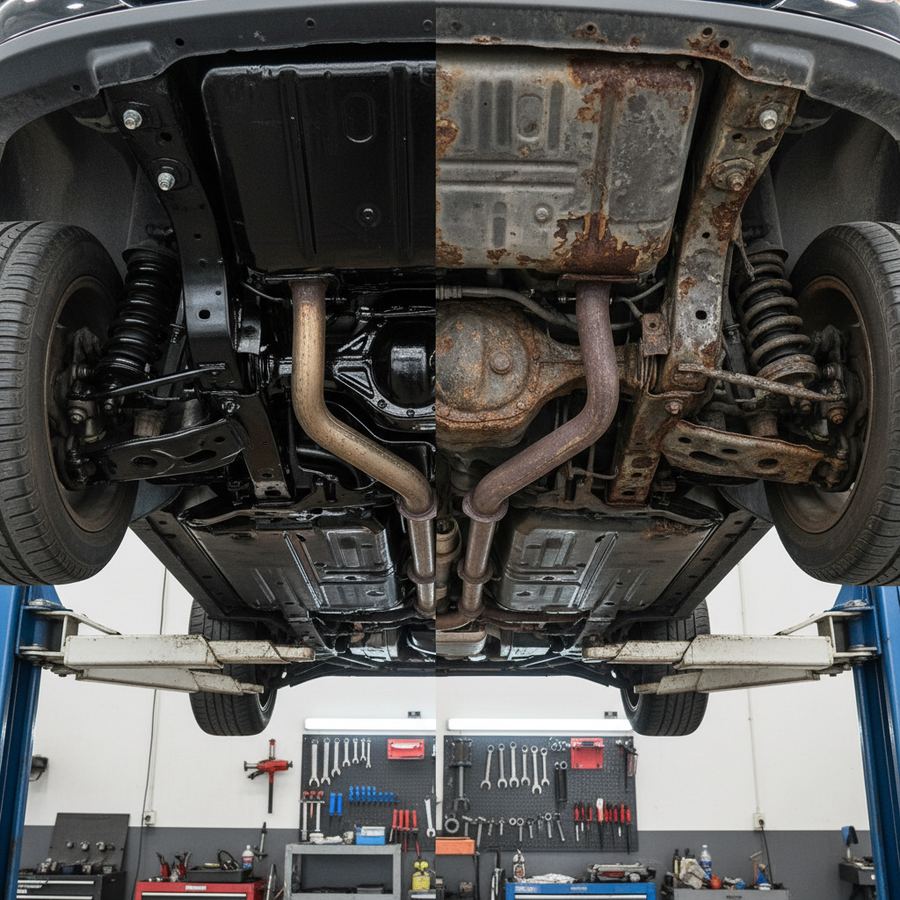
Ontario Is One of the Hardest Places on Earth to Keep a Car Rust-Free
Ontario dumps more road salt per kilometre than almost anywhere else in North America. The province uses roughly 5 million tonnes of salt every winter across highways and municipal roads. That salt keeps roads passable during ice storms and blizzards, but it destroys vehicles at an alarming rate. If you have ever crawled under a 10-year-old Ontario car and compared it to the same model from British Columbia, the difference is hard to believe. One looks like it just left the factory. The other looks like it spent a decade underwater.
Road salt creates an electrolytic environment on metal surfaces. When saltwater sits on bare steel, it accelerates the oxidation process dramatically. Combine that with freeze-thaw cycles that crack existing coatings and trap moisture against panels, and you have conditions that eat through automotive steel faster than most people realize. Brake lines, fuel lines, subframes, rocker panels, wheel wells, and door bottoms all take the hit.
Why This Matters More Than Most Maintenance
Here is the thing about rust that makes it different from every other vehicle problem: you cannot fix it. Not really. You can repair mechanical failures. You can replace worn parts. You can rebuild an engine. But once structural rust has perforated a subframe or rotted through a frame rail, the vehicle is approaching end of life regardless of how well the engine runs.
People spend thousands of dollars on oil changes, brake jobs, and tire rotations over the life of a vehicle, and then lose the car to $200 worth of preventable corrosion. The mechanical components were still fine. The body and structure just gave out underneath them.
In Ontario specifically, rust is the single biggest reason vehicles get taken off the road before their mechanical components fail. A solid rust prevention strategy does not just protect metal. It extends the useful life of every dollar you spend on maintenance and repairs.
What Actually Works
Rust proofing in Ontario is not a one-time treatment. It is an annual commitment. Oil-based penetrants applied before winter are the standard approach in Canada. These products creep into seams, joints, drain holes, and enclosed cavities where moisture collects and corrosion starts. They displace water and leave a protective film on bare metal.
Rubberized undercoatings are the other option. They create a physical barrier on the underbody. They work well on new vehicles but can trap moisture against metal on older vehicles if not applied correctly. Understanding the difference between the two approaches matters, and it depends on the age and condition of your vehicle.
Neither approach works if you skip the basics. Washing salt off the underbody after winter, clearing drain holes in doors and rocker panels, and addressing paint chips before they become rust spots are all part of the picture. Rust prevention is a system, not a single product.
What Rust Prevention Cannot Do
No rust proofing product will reverse existing structural corrosion. If the subframe is already scaling and the brake lines are pitting, rust proofing slows the progression but does not undo the damage. That is why starting early matters. The best time to begin annual rust proofing is when the vehicle is new. The second best time is right now, provided the vehicle still has solid metal underneath.
Ontario's vehicle safety inspection standards include structural integrity requirements. Once corrosion compromises those structural elements, the vehicle will not pass a safety. By that point, prevention is no longer relevant. That is money you cannot get back.
Rust Proofing Articles
- Is Rust Proofing Worth It in Ontario?An honest look at the cost, the value, and when annual rust proofing makes sense for your vehicle.
- How Road Salt Damages Your VehicleWhat salt actually does to brake lines, subframes, and body panels, and why washing alone is not enough.
- The First Places Cars RustWhere corrosion starts, how to spot it early, and what to look for when inspecting a vehicle.
- Rust Proofing vs UndercoatingOil-based penetrant vs rubberized coating. What each does, when each is appropriate, and how to choose.
- Protecting an Older Vehicle From CorrosionStrategy for keeping a 10+ year old vehicle alive in the salt belt, including when it is too late.
Related Reading
Rust prevention ties directly into seasonal preparation and long-term ownership strategy. If you are prepping for winter, the seasonal vehicle prep guide covers battery, tires, coolant, and other items that matter alongside corrosion protection. If you are weighing whether to keep investing in an older vehicle, keeping an older car reliable lays out the framework for making that decision with real numbers.
For official information on road salt usage and environmental considerations in Ontario, Environment Canada's road salts page covers federal guidelines and monitoring data.